All topics: trading questions and answers
Learn the first trading steps, choose a service and understand how a method becomes a written plan. Each short answer links to its written explanation.
1. First steps in trading
Trading for beginners
What is trading?
Trading means buying and selling assets or contracts to profit from price changes. A trade can gain or lose money; a price prediction alone is not a complete trading plan.
Learning to trade
Is trading right for everyone?
Trading takes study, patience and the ability to follow rules through losses. It may not suit someone who expects quick money without risk.
Long vs short
What do long and short mean?
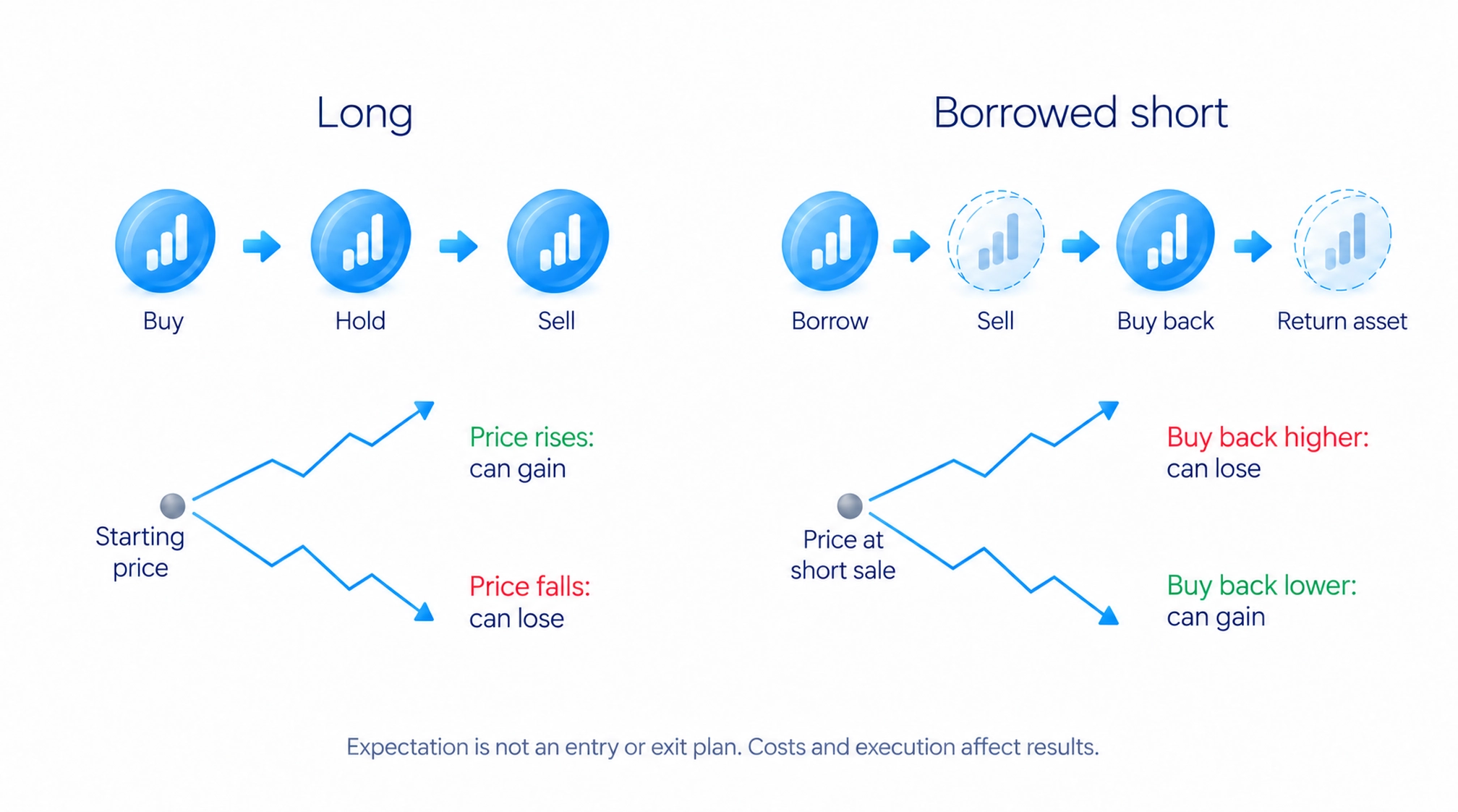
Going long means buying with the expectation that the price will rise. A traditional short involves borrowing an asset, selling it and buying it back later, hoping the price falls.
Price and volume
Why look at price levels and volume together?
A price level is a price or zone used to check how the market reacts. Volume measures quantity traded in the selected data source. Compare the reaction with activity, but neither a familiar level nor high volume identifies an institution or guarantees an entry.
Choosing a market
What should a beginner trade first?
Begin by studying one actively traded instrument and a small, consistent set of observations. Learn the data and method’s conditions before adding more markets or indicators. A recognisable price shape alone is not a complete trade.
How to start trading
Where should I start learning to trade?
Learn how orders, quantity and price changes work, then practise one method’s observations and conditions on a demo account using virtual funds. Keep written rules and distinguish results from different rule versions before considering real money.
Trading account balance
How much money do I need to start trading?
You can begin simulated practice without a real deposit. For live trading, the product’s minimum quantity, cash value of price changes, costs and loss you can afford determine whether the account can support the trade. Skip it if the minimum is already too large.
Entry, stop and target
What should I decide before opening a trade?
Write down the reason and conditions for entry, what price behaviour would invalidate the idea, the money you are prepared to lose and how you plan to take a profit. Choose quantity afterwards. A planned loss exit does not guarantee an exact fill price.
Demo account
What can I learn on a demo account?
A demo account uses virtual money, so you can learn the platform and test rules without risking your funds. Live trading adds the emotions of real gains and losses.
Beginner trading mistakes
What mistakes can wipe out a trading account?
Mistakes include trading without conditions, using a quantity the account cannot support, moving the planned loss exit farther away and immediately trying to recover a loss. Record the action that broke the rule and practise its concrete correction.
Trading education
Can I learn trading on my own?
You can study the mechanics, learn one method and practise its orders with virtual funds. Keep its rules and record changes so that trades made under different methods are not mistaken for one consistent test. Reading should resolve a practical question, then lead to checking that action.
Trading discipline
What habits should a beginner develop?
Record why you entered, quantity, exit, result after costs and departures from the rules. Use the record to correct a specific action, such as entering before confirmation or submitting the wrong quantity. A losing planned trade is not automatically a mistake.
2. Trading and long-term investing
Trading time horizon
How is trading different from investing?
Traders usually aim to profit from shorter price moves. Investors generally hold assets longer, seeking growth or income from ownership.
Time spent trading
Does trading take more time than investing?
Active trading usually requires more frequent decisions about entries and exits. Long-term investing generally involves fewer trades and a longer holding period.
Trading returns
Is trading more profitable than investing?
There is no single answer. Results depend on skill, risk, costs and the method used. Making more trades does not automatically mean earning more.
Protecting your money
How do traders and investors manage risk?
Traders plan position size and exits, but execution can make the loss larger than planned. Investors consider asset quality and spread their holdings; a longer horizon and diversification do not remove all risk. Both need a loss plan.
Choosing an approach
Should I trade or invest?
Consider your goals, available time and ability to handle losses. The approach should fit your life, rather than promises of unusually high returns.
3. Checking your results
Profit factor vs win rate
Can a high win rate still lose money?
Yes. Win rate counts how often trades win; profit factor compares total gains with total losses. Many small wins can be outweighed by a few large losses and trading costs.
4. Brokers and trading software
Trading platform
What is a trading platform?
A trading platform is software for viewing data, sending instructions and monitoring trades. Features depend on the program, connection and account; a charting service does not necessarily support live trading.
TradingView for beginners
What can I do with TradingView?
TradingView provides charts, drawing tools and indicators. Paper Trading uses virtual funds. Trading through a connected broker is separate and depends on supported integrations, products and account permissions.
TradingView volume
How does Arapov set up his chart?
For the course exercises, choose the exact instrument, data source and period represented by each price bar. Keep price, relevant levels and the volume display. Establish whether that volume measures traded units or quote updates.
Paper trading practice
How should I practise with virtual money?
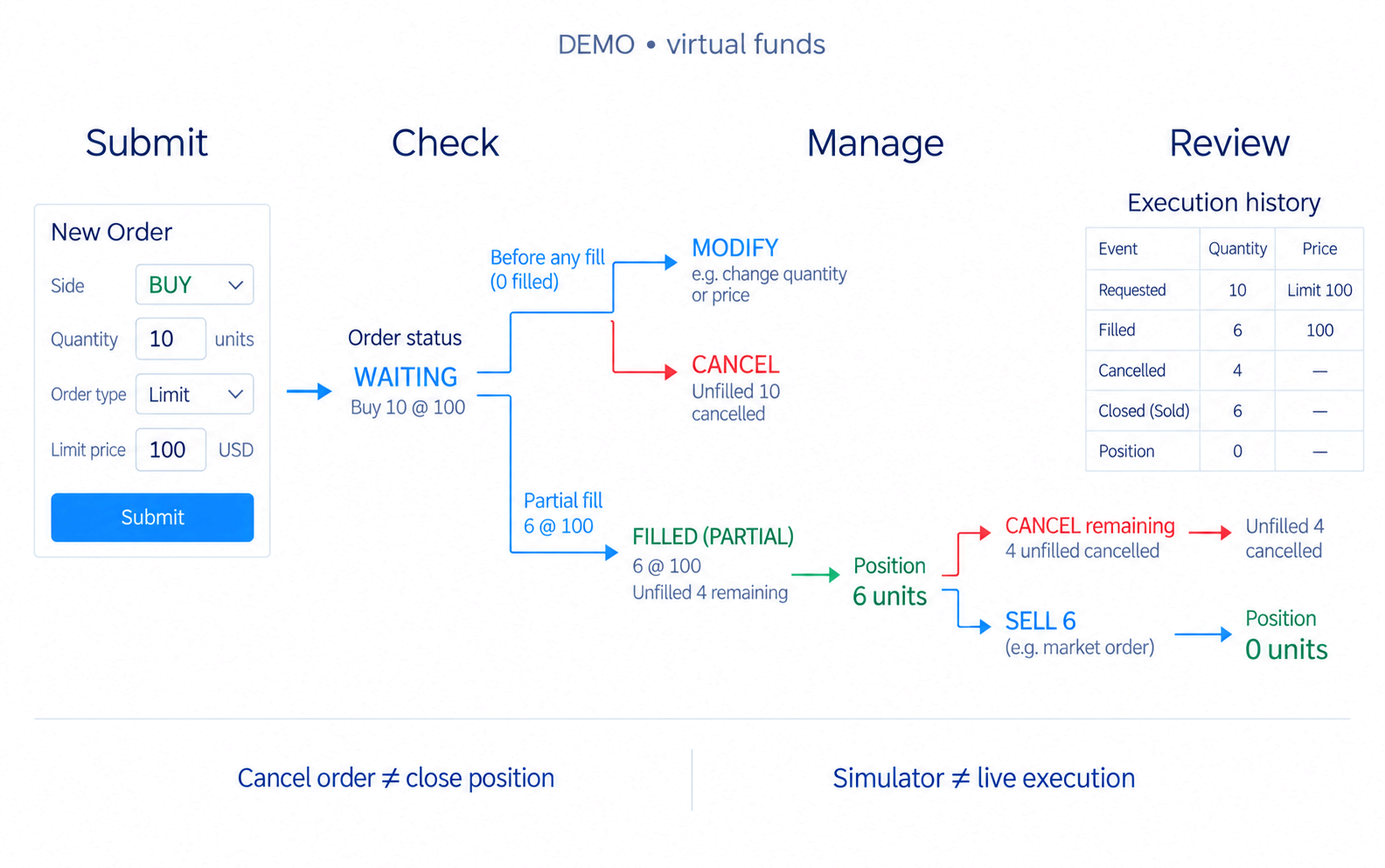
Confirm that the account uses virtual money. Practise submitting an order, checking its status and fill, changing or cancelling an unfilled order, and closing an open trade. Compare the requested quantity and price with the execution history. A simulator teaches controls, not proof of live fills or a profitable method.
Broker vs exchange
How is a broker different from an exchange?
An exchange organises trading. A broker gives clients access to markets, while a platform is the software they use. These are different roles.
Choosing a broker
How do I choose a broker?
Check the contracting company and its current permitted services in the regulator’s official register. Read how client money is held, complaint procedures, product and execution terms, charges and withdrawals. Registration does not guarantee profit or protection against every loss.
Broker warning signs
How can I spot a suspicious broker?
Be wary of guaranteed returns, pressure to deposit and unclear withdrawal rules. Check the company through official sources rather than relying on its advertising.
Price alerts
What is a price alert?
It notifies you when price reaches a level or another chosen condition occurs. An alert helps you monitor a market, but it is not a reason to trade on its own.
5. Choosing a trading style
Types of trading
What are scalping, day trading and swing trading?
Scalping uses very short trades. Day trading opens and closes trades within a day. Swing trading holds positions for several days or longer.
Scalping fees
Why do fees matter so much in scalping?
Scalpers make many trades for small price moves. Commissions and other costs can therefore take a large share of their gains.
Day trading
What is day trading?
Day trading opens and closes trades within the same trading day. It avoids carrying them into the next session, but still requires attention to the chosen method and execution conditions.
Swing trading
What is swing trading?
Swing trading holds trades for several days or weeks to capture a price move. Less frequent entries do not mean no monitoring; news during a market break and price gaps can affect the exit.
Position vs algorithmic trading
What is the difference between position trading and algorithmic trading?
Position trading describes a long holding horizon. Algorithmic trading means software carries out trading rules, describing execution rather than the holding period. The same approach can use both.
Trading costs
Why can frequent trading be expensive?
Each trade may involve a spread, commission or other cost. More trades increase total costs, especially when each expected gain is small.
Trading pace
Which trading style does Arapov suggest for beginners?
The course demonstrates waiting for stated price-structure and level conditions rather than creating more entries. Choose a pace at which you can perform the rules, check the trade and carry it through permitted sessions. No universal scalping-or-swing choice is established.
High-frequency trading
Why does speed matter in HFT?
High-frequency trading uses computers to submit and change orders very quickly. Shorter communication time, including locating equipment near an exchange’s systems, can matter when competing for a rapidly changing price. Speed does not guarantee a profitable trade.
6. Trading with a prop firm
Prop trading
What is prop trading?
Proprietary trading means a firm trading for its own account. Retail programmes using that label may instead sell an evaluation and simulated trading. The account model therefore needs to be identified before treating the programmes as the same thing.
Prop challenge limits
What can make me fail a prop challenge?
Breaking a daily or overall loss limit can end the challenge, even if other trades were profitable. Read the rules and plan your risk before trading.
Funded account
What is a funded trading account?
It is a programme stage with specified trading and reward conditions. The account can remain simulated. Its advertised size does not mean that amount belongs to you or is available to withdraw.
Personal vs prop account
Should a beginner use a prop firm?
If you do not yet have written trading rules and cannot apply the loss limits, practise first. A paid prop programme adds fees and reward conditions to the trading method. Check those terms and set a total budget for attempts before paying.
7. Following another trader
Copy trading
What is copy trading?
Copy trading generates instructions in your account when a selected trader acts, under the service’s settings. It can reproduce losses as well as gains.
Copy trading positions
How are trades copied to my account?
The service generates account instructions when the selected trader opens, changes or closes a trade. Sizing may use a proportion, multiplier or fixed amount. Check which existing and future trades are copied and whether manual changes stay in effect.
Learning from copied trades
Can copy trading help me learn?
It can show how someone sizes trades and handles losses if you actively study their decisions. Copying alone does not teach you how to build your own method.
Copy trading rankings
Is the top-ranked trader the safest choice?
No. High past returns can come from high risk. Look at losses, position sizes and the length of the record, rather than choosing by returns alone.
8. Using AI as an assistant
AI trading tools
How can AI help a trader?
AI tools can provide explanations or code, estimate a defined outcome, or send orders under specified rules. First check which function the service provides, its data access and permissions, and whether its output is correct.
AI price predictions
Can AI predict market prices accurately every time?
It cannot guarantee a future price. Its performance depends on the chosen task, horizon and data; test predictions on new observations rather than trusting a confident explanation.
Trading journal analysis
Can AI help review my trades?
It can group and check recorded trades, provided the input fields and results are verified. A loss alone does not prove an emotional mistake. The analysis describes past records, not guaranteed future prices.
AI and trading rules
Can AI replace a trading system?
An AI suggestion still needs clear data, entry conditions, exits and limits on quantity before it can be tested. Generated code can be wrong. Check individual cases and new data; a successful program run or attractive historical chart does not establish a profitable method.
Trading probabilities
Can I trade without predicting every price move?
You can use observable conditions and choose an exit if an expectation is wrong without predicting every move. The method still needs testing; limiting a loss alone does not make it profitable.
9. Building consistent trading rules
Trading system
What is a trading system?
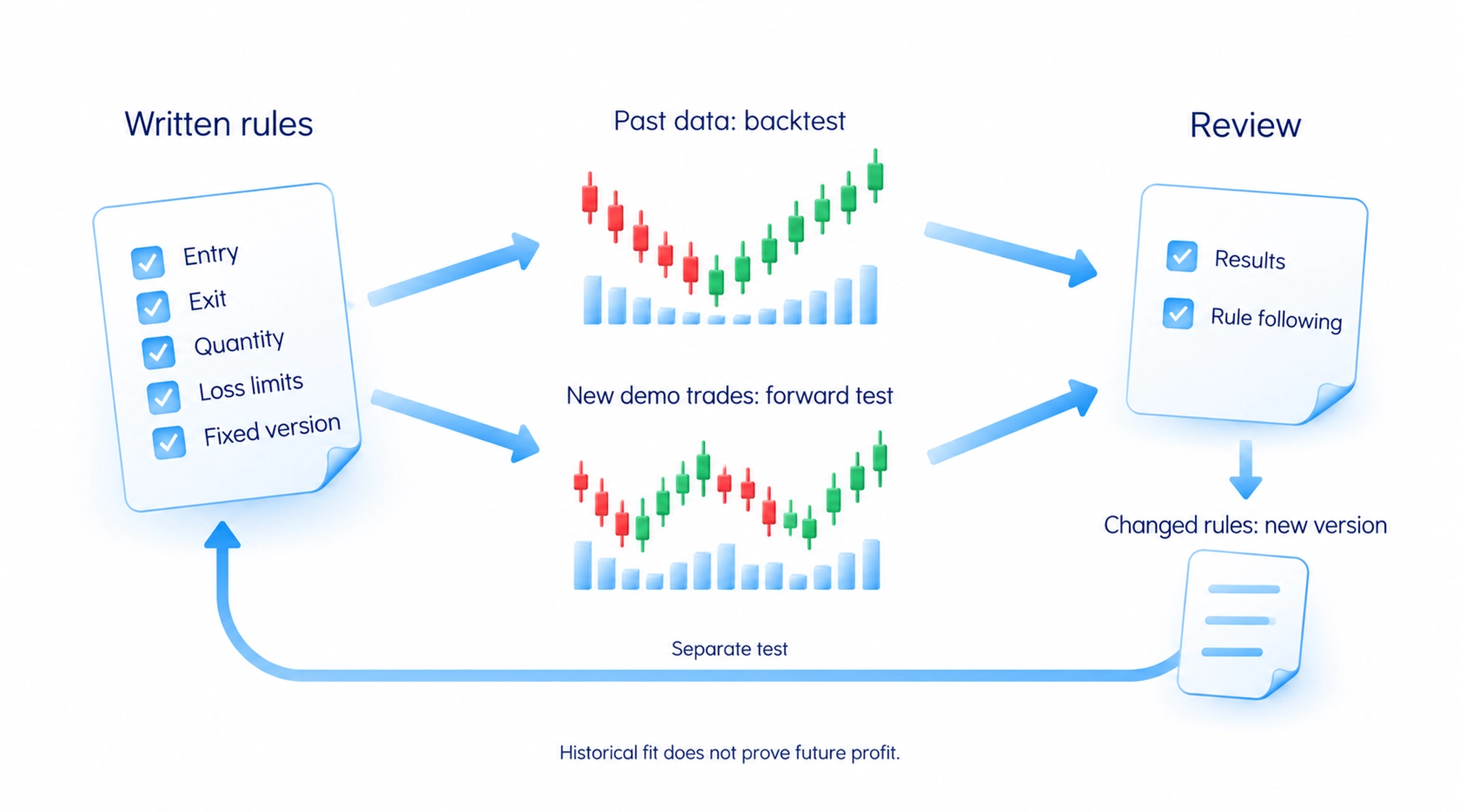
It is a set of rules for entering, exiting and managing risk. Written rules help you make consistent decisions and review your results.
Trading system components
What rules does a trading system need?
It needs trading conditions, an entry condition, exit rules, position size and loss limits. Write these down before opening a trade, including when the rules require you to skip it.
Trading plan
How is a trading plan different from a system?
A system describes the method. A trading plan sets out how you will use it, including markets, entries, exits, risk and when to stop trading.
Backtesting
What is backtesting?
Backtesting checks trading rules against past data. If rules only work on the data used to tune them, they may have been fitted to history rather than finding a reliable pattern.
Forward testing
What is forward testing?
It checks ready-made rules on new trades as they occur, often on a demo account. Record results and whether the rules are practical to follow.
Trading journal
What should I write in a trading journal?
Record the instrument, reason for entry, exit, risk and result. Include mistakes and emotions so you can see what needs improvement.
Mechanical vs discretionary trading
What is the difference between mechanical and discretionary trading?
A mechanical system has explicit rules for each action. Discretionary trading allows judgement about the situation, but still needs rules and risk limits.
About these learning materials
This section draws on the ArapovTrade library and Igor Arapov’s educational videos. It offers definitions, instrument comparisons, explanations of market mechanics and the author’s trading approach.
The library’s author is Igor Arapov, a practising trader since 2013. The detailed lessons explain each subject in context; these short answers provide a starting point.




