A stablecoin is a token designed to keep its price near a reference value, often one US dollar. That is a design objective, not a promise that every holder can sell at that price at any moment. Before using one, check what supports its value, who can exchange it for money and which network carries it.
USDT, USDC and DAI can serve similar purposes on a trading platform while exposing their holders to different rules. A dollar label does not make them a bank deposit, and owning the token does not automatically entitle you to interest on the assets supporting it.
How a stablecoin stays near its reference price
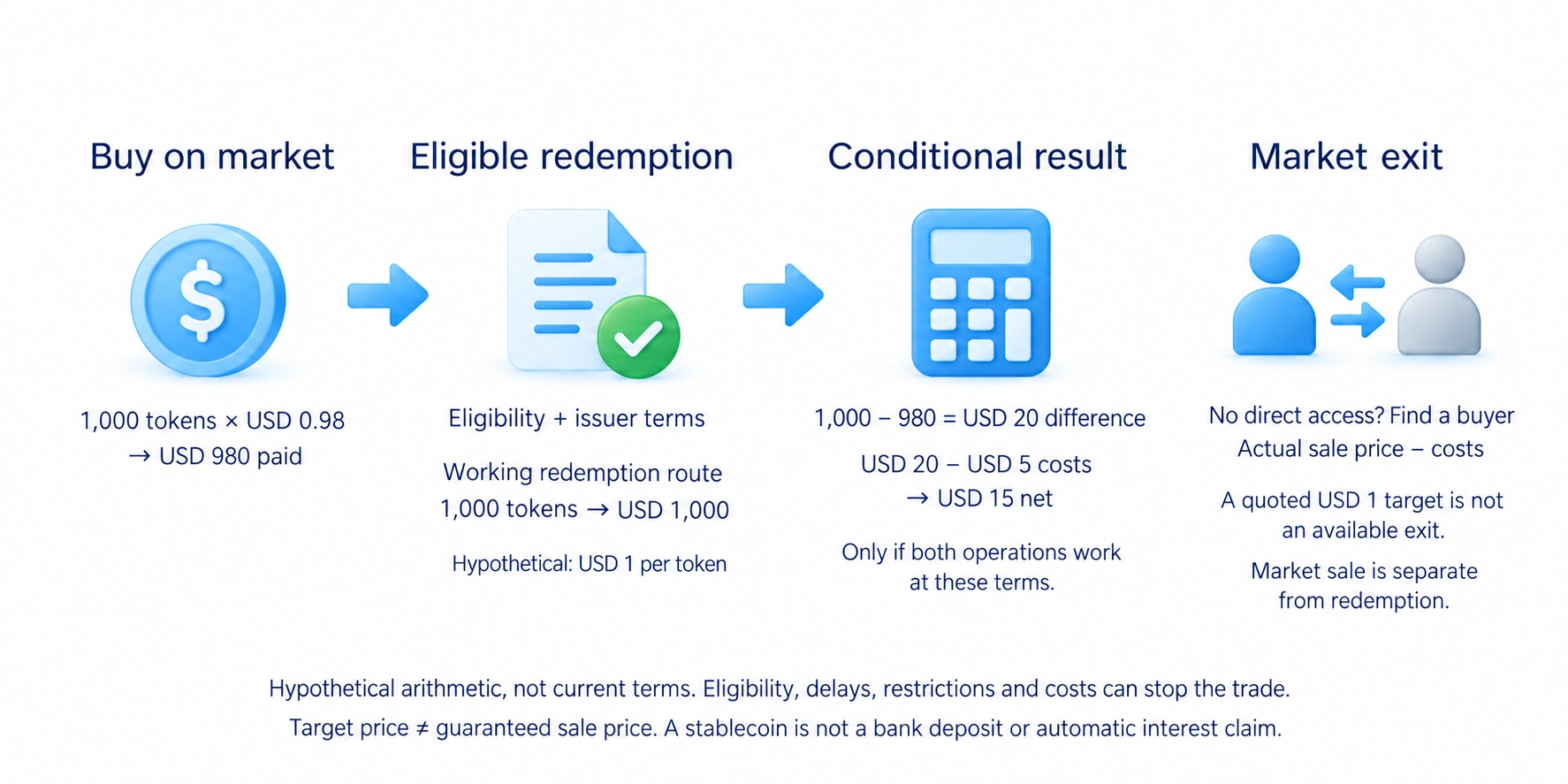
Two prices matter: the amount available through direct redemption and the amount buyers offer on the market. Redemption means exchanging the token through the arrangement specified by its issuer or protocol. A holder who cannot use that arrangement must find another buyer.
For an issuer-backed token, eligible customers may create tokens by providing money and redeem them under the issuer's terms. This can help keep the market price near the reference value. Access may depend on identity checks, location, minimum amounts and fees. Do not assume an exchange balance gives you the same redemption rights as an approved direct customer.
When a token trades below its redemption value, an eligible trader may buy it and redeem it. This trade only makes sense if the price difference exceeds the costs and the redemption process works. Delays, restricted access or doubt about the supporting assets can prevent this mechanism from restoring the price quickly.
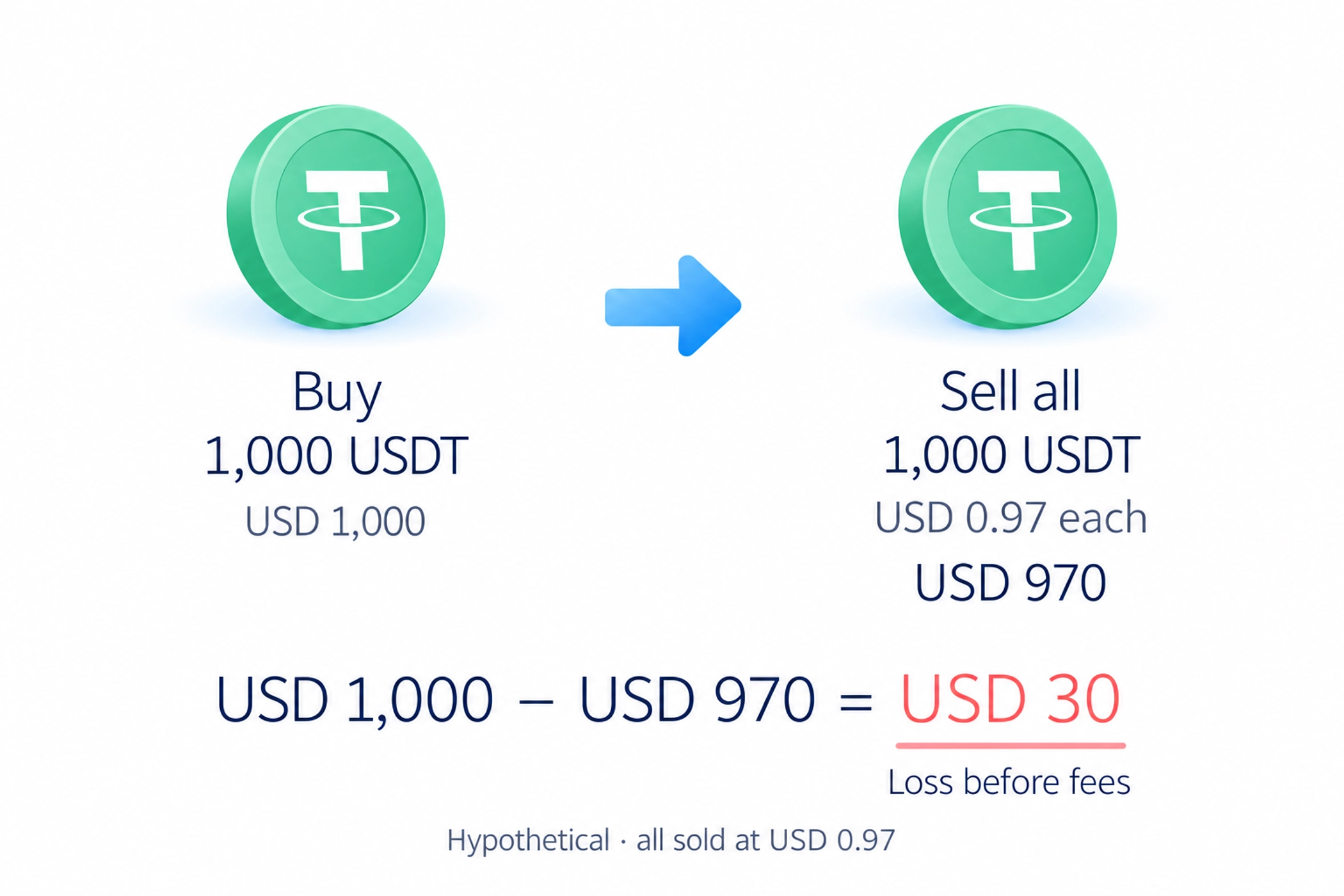
A depeg is a departure from the intended reference price. Suppose you bought 1,000 USDT for USD 1,000 and later sold all of them at USD 0.97 each. You would receive USD 970, a USD 30 loss before fees. This assumes the whole quantity can be sold at that price; a displayed quotation alone does not establish that.
The method matters as much as the reference currency. A token may rely on assets held by a company, assets committed under software rules, exchanges between related tokens or contracts intended to offset changes in the backing assets' prices. These arrangements fail in different ways.
How USDT, USDC and DAI differ
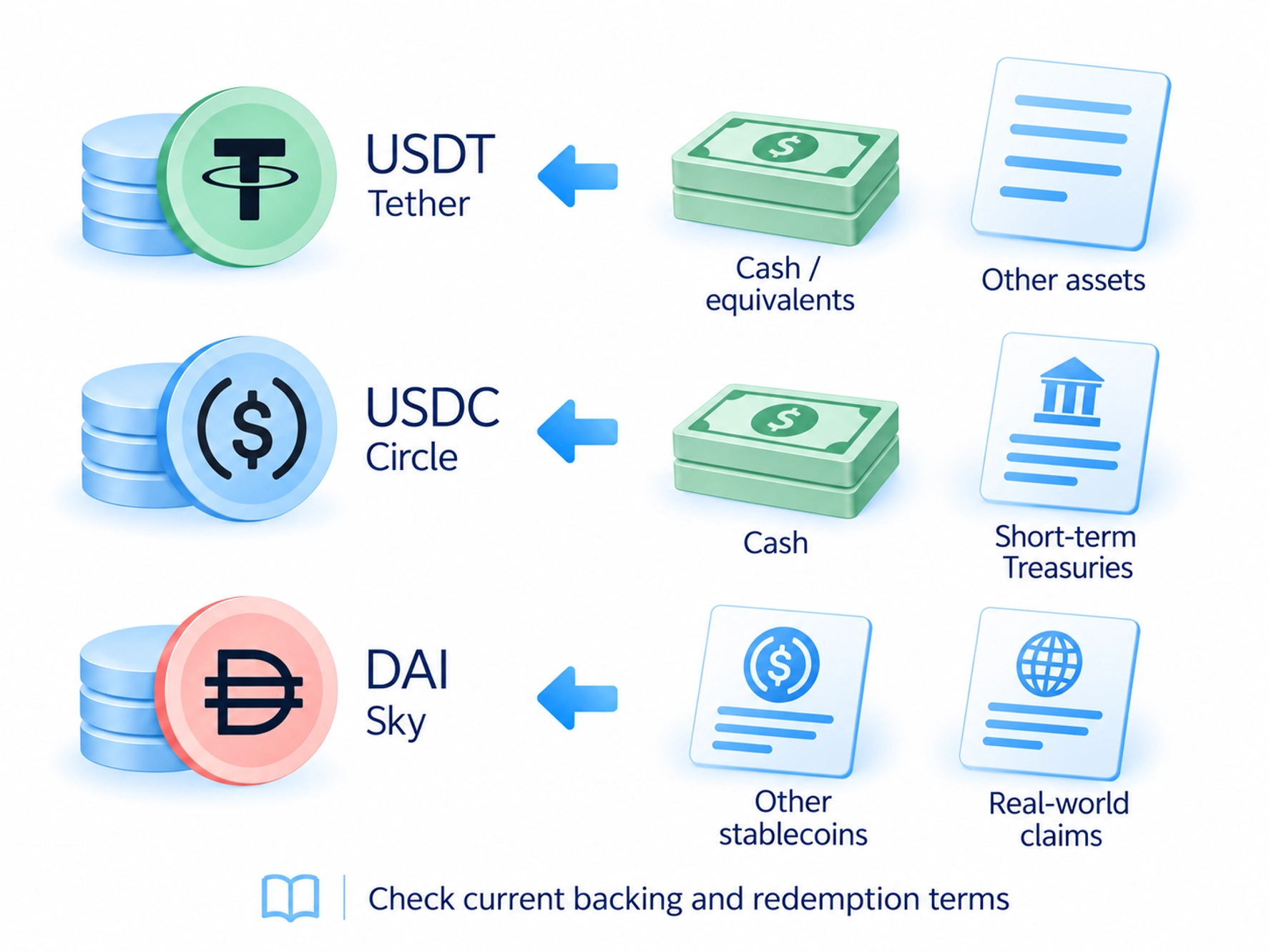
USDT is issued by Tether. Its terms describe reserves that can include cash, cash equivalents and other assets, rather than only dollars sitting in a bank account. Read the current reserve report and redemption terms separately: the report describes supporting assets, while the terms establish who can claim redemption and under what conditions. The Bitcoin guide distinguishes a BTC holding from a token designed around a dollar reference.
USDC is issued by Circle. Its reserve disclosures describe cash and short-term Treasury-related holdings, but direct access still depends on the applicable terms. Some arrangements are available to approved Circle Mint customers; a separate redemption process applies to eligible holders in the European Economic Area. Check the rules for your location rather than applying one region's procedure everywhere.
DAI is supported through the Sky protocol, formerly Maker. Collateral means assets committed to support the system's obligations. Its backing can involve different asset types and arrangements, including dependence on other stablecoins and assets linked to real-world financial claims. It is misleading to describe DAI as supported only by cryptocurrency or free of every outside dependency.
An algorithmic model may try to support the price by changing supply or exchanging the token for a related asset. If that related asset loses value and holders lose confidence, the exchange rule may fail to preserve the intended price. A functioning formula is not proof that sufficient value will remain available during a rush to sell. The collapse of UST in 2022 is a historical example of a dollar-price target failing; it does not prove that every model has the same mechanism.
A synthetic model can combine backing assets with contracts that benefit when those assets fall in price. The offset depends on the contracts, trading venues, custody arrangements and ongoing costs. Payments between contract holders can turn negative. This is a different mechanism from holding cash for redemption, even when both tokens aim at one dollar. The DeFi guide explains additional dependencies when tokens are used in decentralised services.
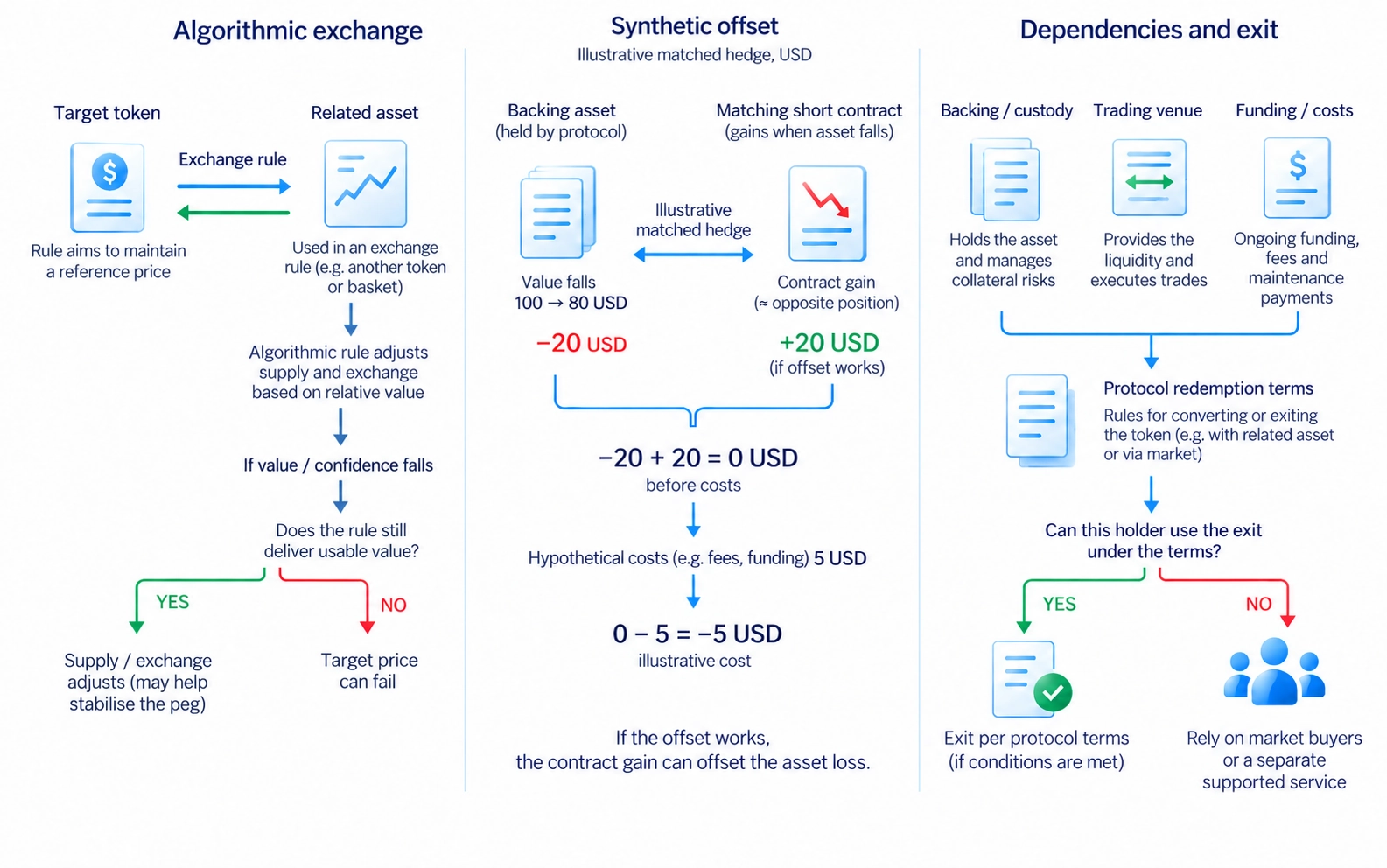
To compare tokens, write down the reference value, backing mechanism, redemption route and outside dependencies. Then ask whether you personally can use that route. A familiar ticker and a large quoted market value do not answer those questions. Tokenomics explains issuance and distribution rules in more detail. A central issuer may have transfer-control powers; a protocol-based arrangement instead depends on its software rules, collateral and governance, and can still rely on outside issuers.
Checking reserves and redemption rights
A reserve report is useful only when you read its date, asset categories and scope. Cash, short-term government securities, loans and other assets have different availability and risks. A figure for one reporting date does not establish the composition or accessibility of the reserves throughout the following period.
An attestation checks specified information for a stated purpose and scope. An audit of financial statements has a different subject and scope. Neither label should be treated as a permanent guarantee of redemption. Read what was examined, the reporting date and any qualifications instead of relying on the word audited in a promotional summary.
Next, read the redemption terms. Check customer eligibility, location, minimum amounts, fees, processing conditions and circumstances in which service can be suspended. A market purchase is easy to arrange in many places, but the ability to buy a token does not establish the ability to redeem it directly.
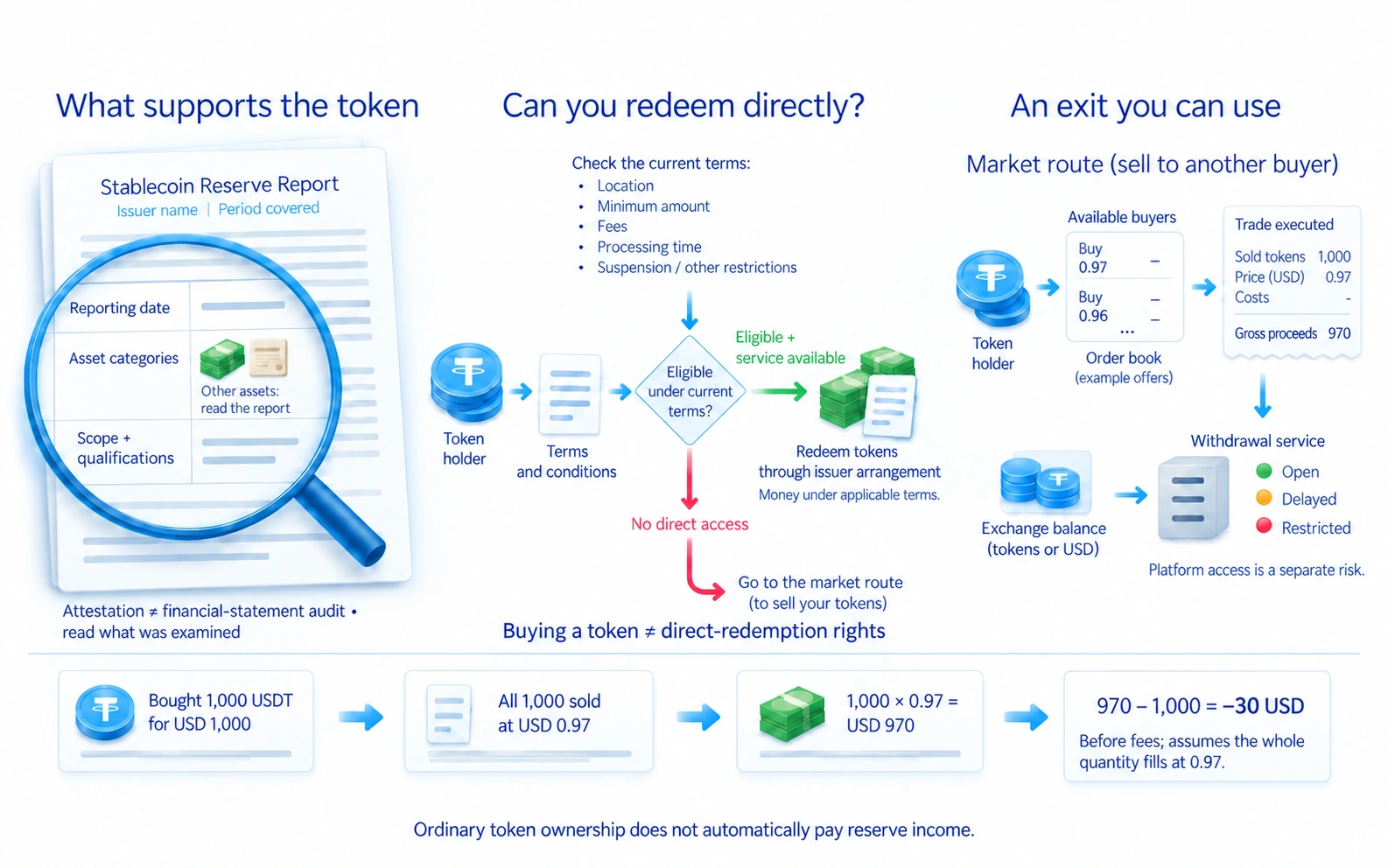
If an exchange holds the token for you, you also depend on that exchange's records and withdrawal service. The token's backing and the platform's ability to return your balance are separate questions. A well-supported token cannot by itself prevent a platform from restricting withdrawals.
Yield adds another arrangement to inspect. Holding an ordinary stablecoin does not automatically give you the reserve income. A lending service, savings contract or separate reward-bearing token introduces its own conditions, withdrawal rules and risks. Check which party or activity pays the return before treating it as income from the stablecoin itself.
Transfer restrictions and the chosen network
Some issuer-backed tokens include functions that can restrict transfers from particular addresses. The applicable contracts and legal terms determine these powers. Keeping your own wallet keys gives you control of the wallet's instructions; it does not remove restrictions built into the token.
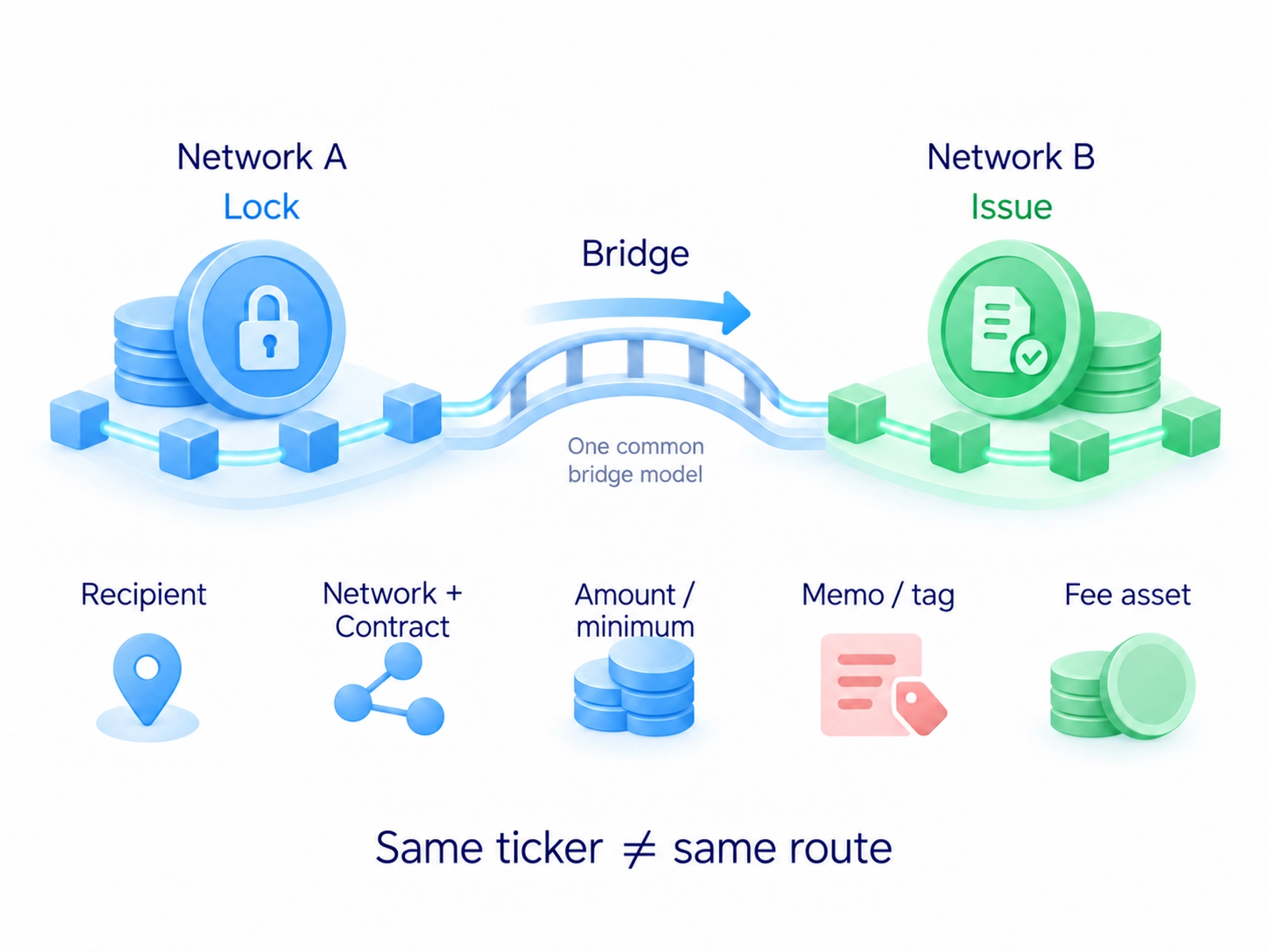
The same ticker can appear on several networks. Check the exact network and token contract, the program defining that token, supported by the sending and receiving services. A correct-looking address or the word USDT on both screens is not enough to prove that the routes match.
A bridged token is created through an arrangement that links assets on different networks, often by locking a token on one network and issuing a corresponding token on another. It adds dependence on that arrangement. Bridged USDC, for example, should not be assumed to have the same direct redemption route as native USDC issued by Circle.
A transfer may also require the network's own fee-paying asset. Before sending, check the destination, network, amount, required memo or tag, an extra destination identifier used by some services, and available fees. Use the receiving service's current instructions and, where practical, a small test transfer. A successful earlier transfer does not establish support for a different network today. The cryptocurrency-storage guide explains keys and recovery.
Before using a stablecoin
Choose the token for the task you need it to perform. For a trading balance, check available trading pairs, market buyers and sellers, fees and withdrawals. For a transfer, check compatible networks and the recipient's requirements. For direct redemption, establish your eligibility before committing a large amount.
Keep platform risk and token risk on separate lines. Ask who holds your balance, who supports the token and what could interrupt either route. Holding several tokens through one platform does not remove dependence on that platform; different tokens can also share the same backing asset or service.
Finally, record an exit route that you can actually use. If direct redemption is unavailable to you, your practical exit depends on market buyers or another supported service. A stablecoin can reduce the need to hold a volatile trading asset between trades, but it replaces that price risk with a different set of conditions rather than eliminating risk altogether. Cryptocurrency for beginners introduces the wider choices involved in holding and trading digital assets.
Frequently asked questions
A stablecoin targets a reference value, often one dollar. Ordinary cryptocurrency prices have no comparable price target. The target depends on a mechanism and does not guarantee the price at which you can sell.
No. USDT aims to remain near one dollar, but its market price can depart from that level. Your access to direct redemption depends on eligibility and the applicable terms. Market selling also depends on available buyers.
USDT and USDC rely on their issuers and reserve arrangements. DAI uses protocol rules and different arrangements for assets committed to support them. Compare actual backing, redemption access and outside dependencies rather than treating the three names as interchangeable dollars.
No. A report describes specified information at a reporting date. Check its scope and the redemption terms as well. It does not establish that every holder can receive money immediately or that service cannot be interrupted.
A depeg is a departure from the intended reference price. You can lose money when selling below the price you paid, and the amount available for sale may affect your actual result. Waiting for the target price to return is not a guaranteed recovery plan.
Check that the exact token and network match the receiving service's instructions. Confirm any memo or tag, an extra destination identifier, plus the minimum amount and network fee requirement. Where practical, test a small amount before transferring the rest.
Only under an arrangement that pays it, such as a particular lending service, savings contract or reward-bearing token. Ordinary ownership does not automatically grant reserve income. Read where the return comes from and when you can withdraw.
About the author
Igor Arapov, a practicing trader since 2013 and author of the ArapovTrade library. ORCID: 0009-0003-0430-778X.




