Crypto arbitrage uses price differences in linked cryptocurrency trades. A trader buys at a lower price and sells at a higher one, or completes a sequence of exchanges intended to return more of the starting asset. A profit exists only after the required trades finish and their costs are deducted.
The useful question is not whether a scanner shows a gap, but whether you can execute the necessary quantity and complete the chain. Cryptocurrency for beginners explains coins, networks and the products used to trade them. Identify the actual asset before comparing its prices.
How crypto arbitrage works
For arbitrage between exchanges, compare the price at which you can buy on one venue with the price at which you can sell on the other. Match the asset, the currency used to pay for and receive the trade, and available quantity. The last trade shown on a chart is not necessarily available for your next order.
A buyer needs sellers' available offers, while a seller needs the prices available buyers will pay. The difference between the best buying and selling prices is the spread. The best price may cover only part of your quantity, with the rest trading at different prices.
Examine the order book and execution rules before using the quote. The book displays currently available orders; it does not reserve them for you. Another trader can take the quantity, or an order can be cancelled before your instruction reaches the market.
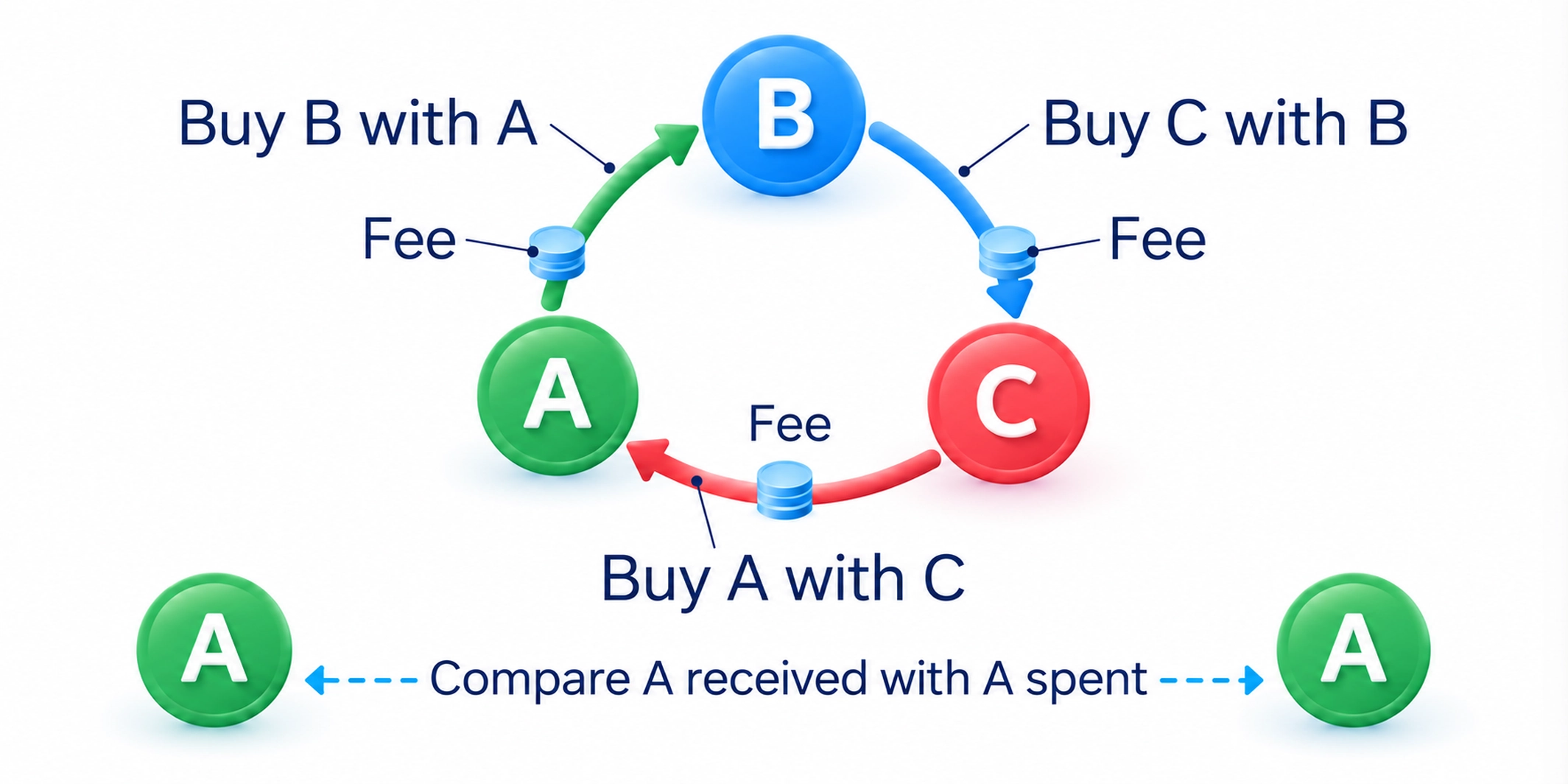
Triangular arbitrage exchanges through three pairs and returns to the starting asset. It can take place on one exchange without a transfer between venues. Each trade still needs execution, and fees or quantity rounding can remove the apparent gain. On a decentralised exchange, a program may execute several linked swaps within one network transaction; its rules, processing cost and other transactions' ordering still matter.
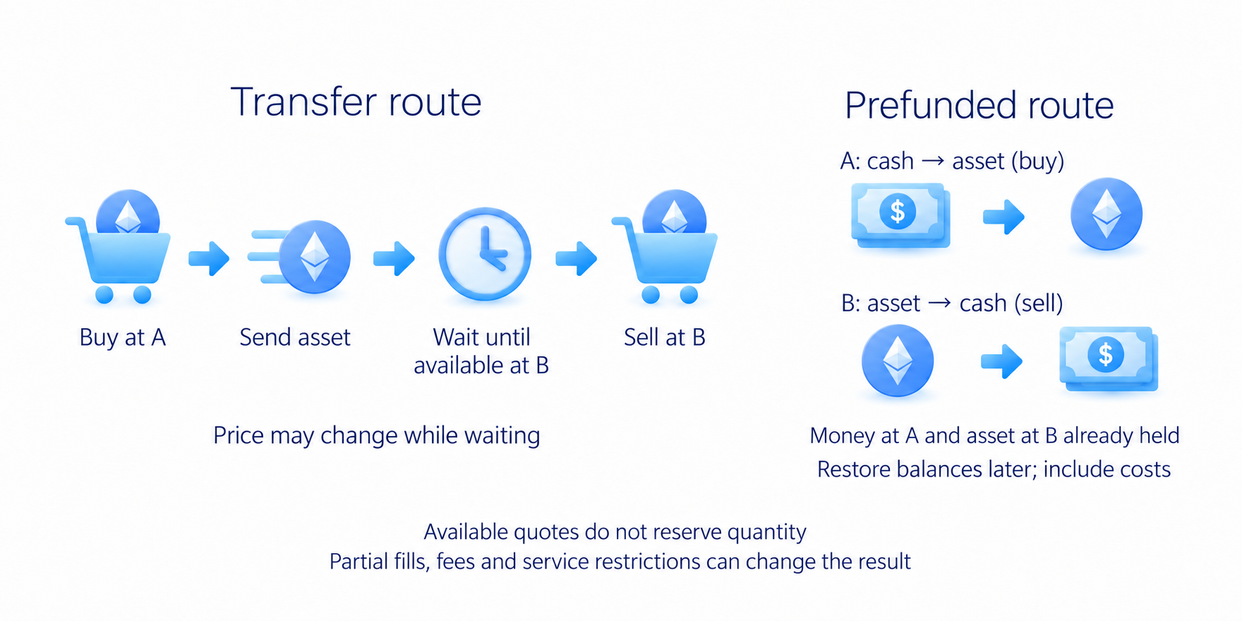
A transfer-based route buys coins, sends them to another venue and sells after they become available there. Price can move while the transfer is processed. Network confirmation and permission to trade or withdraw the credited asset may also arrive at different times.
Another route starts with money already held on the buying venue and coins on the selling venue. A transfer is then unnecessary between the two orders. Afterwards the balances have changed: more coins on one venue and more money on the other. Repeating the route may require restoring those balances, with transfer costs and restrictions. Funds held at both venues are also subject to each service's risks.
Calculating the result after costs
Start with the quantity you can buy and sell against the available offers. The gross difference is the result before costs. The net result includes the trades' fees, required transfers and other costs of that particular route. Do not deduct a cost twice if it is already included in the quoted execution price.
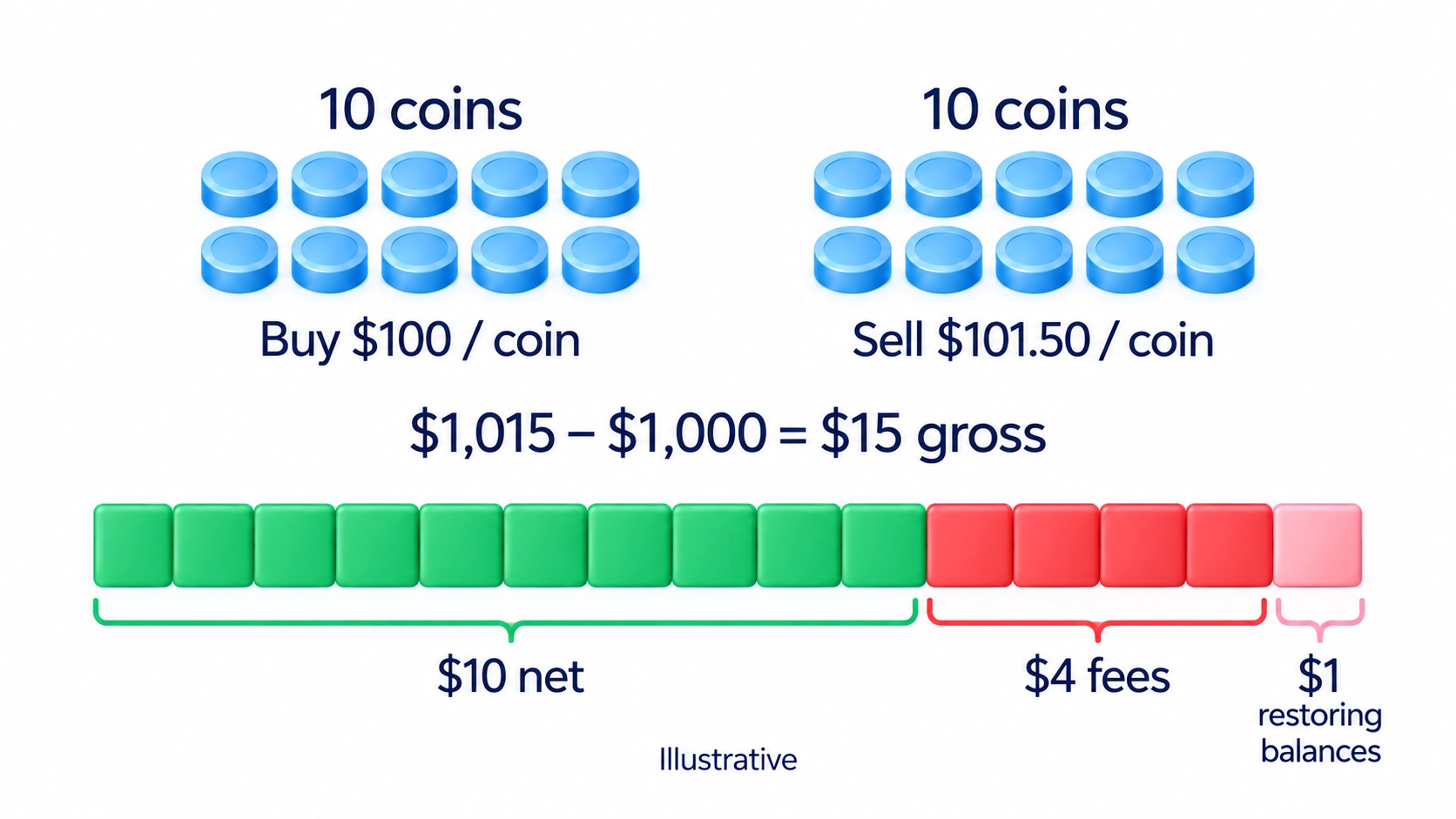
Consider a hypothetical purchase of ten coins at USD 100 each on one exchange and a sale of the same quantity at USD 101.50 on another. The necessary money and coins are already held on their respective venues. The purchase costs USD 1,000 and the sale brings USD 1,015, giving a gross difference of USD 15.
For this example, total trading fees are USD 4 and restoring the balances costs another USD 1. If both orders fill completely at the stated prices, the result is 15 − 4 − 1 = USD 10 before taxes. These costs are hypothetical, not any exchange's tariff.
If those prices do not cover the whole quantity, the calculated result no longer holds. An order may fill partly, leaving coins to sell at another price. Check actual prices and quantities in the execution records, rather than the quote seen before sending the orders.
A limit order sets an acceptable price but may remain unfilled. A market order seeks available orders immediately, but its price and filled quantity depend on the book and venue rules. Sending orders to separate exchanges at the same time does not make them one indivisible transaction.
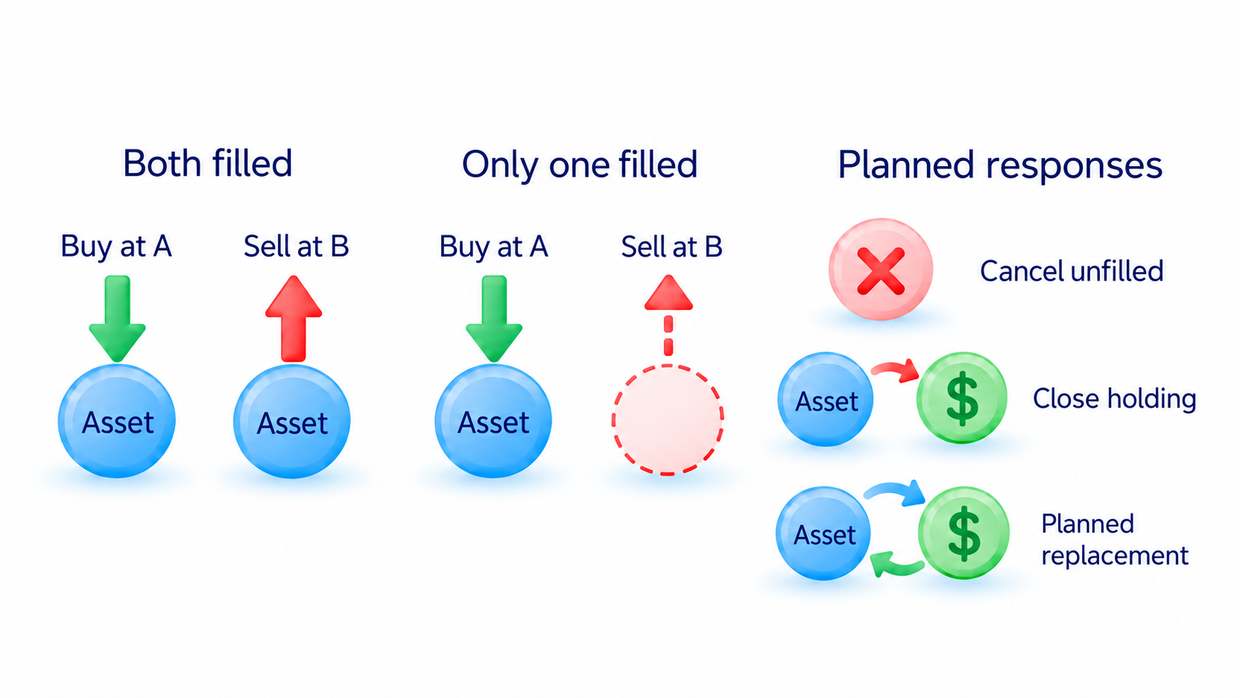
Before starting, define what you will do if only one side fills: cancel an unfilled order, close the resulting holding or use a planned replacement trade. That exit can cost more than the expected arbitrage gain. A small displayed price difference does not justify increasing quantity without checking this failure case.
Buying coins and selling a futures contract
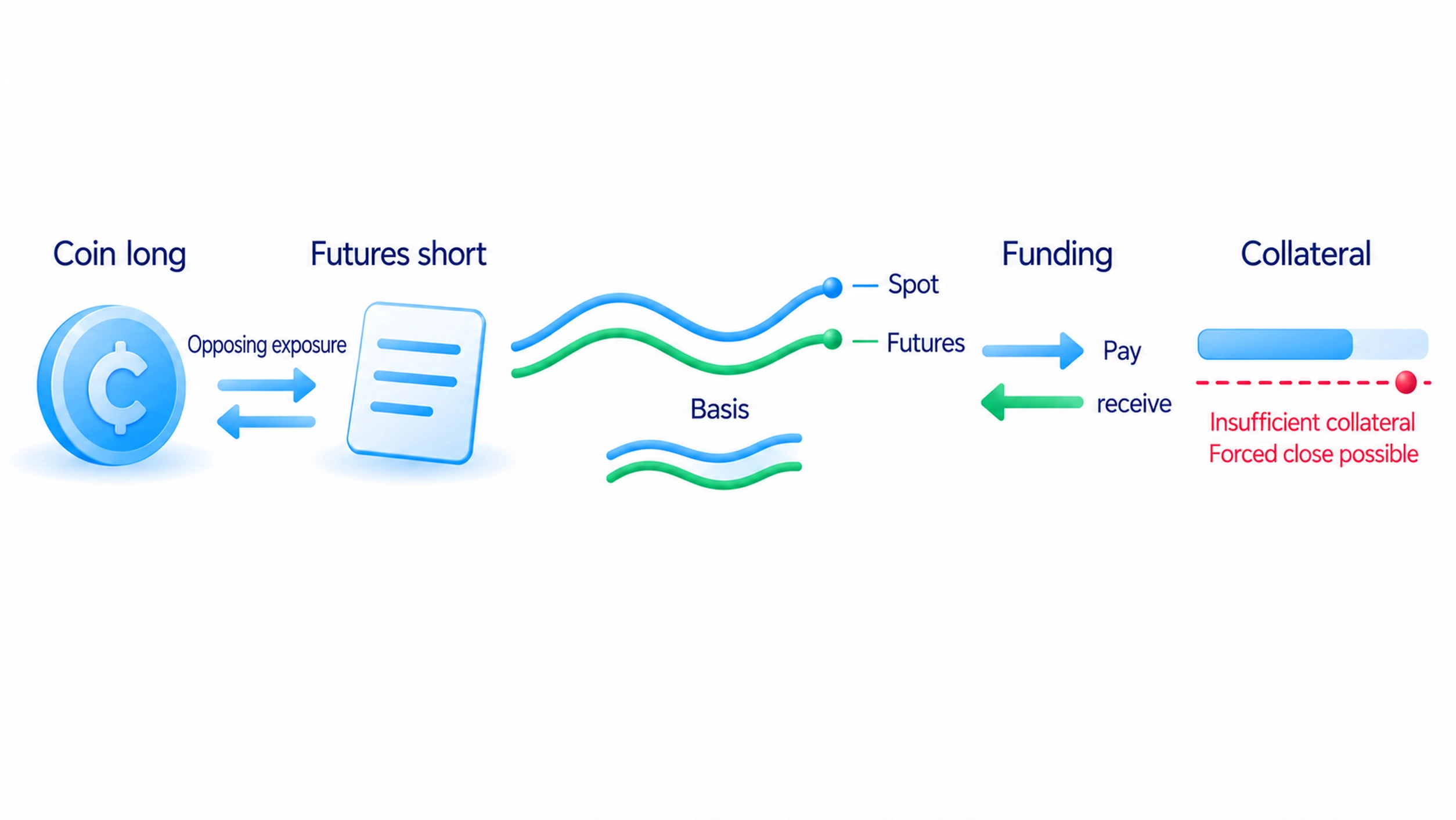
Delta describes how a product responds to a small change in the underlying asset’s price. A delta-neutral combination aims to offset those changes. A coin purchase and a futures trade opened for a fall whose money result changes proportionally with the coin’s price can reduce directional risk when appropriately matched. Their prices can still diverge, so neutrality does not mean a fixed result.
The difference between the contract price and the coin price is called the basis. A dated futures contract has an expiry and settlement rules. A perpetual contract normally has no expiry and may use funding, periodic payments between trades opened for a rise and those opened for a fall. Who pays and how much depends on the rate and product rules.
The trade opened for a fall does not always receive funding; the rate's sign can change. Trading fees, changes in the basis and costs of holding both sides also affect the result. The displayed rate does not guarantee the same income throughout the trade.
The funds pledged to support the futures trade are managed under its venue's rules. If they become insufficient, the trade may be forcibly closed even though coins held elsewhere have increased in value. Check contract units, both quantities, pledged funds and the ability to close both sides. Spot and futures explains the underlying product differences.
Risks in P2P arbitrage
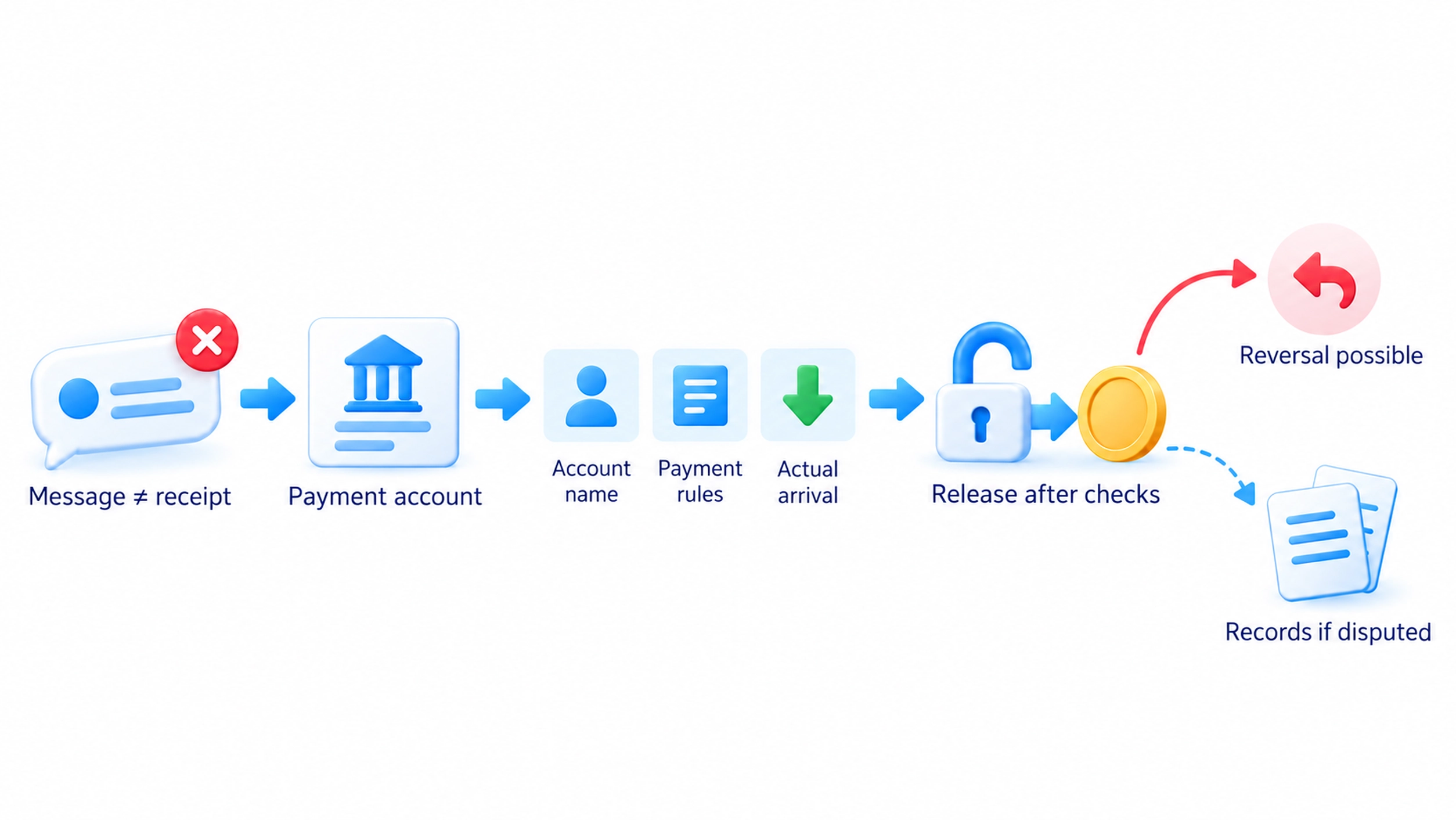
P2P means exchange between users. A route may combine different advertisements, payment methods or currencies. Check more than the price: a bank payment and a cryptocurrency transfer follow different rules, and the other party can delay or dispute a step.
Read the advertised rate alongside the particular payment's conditions: permitted amount, fee, processing time, account-holder name and availability of the next exchange. A rate offered for one amount or payment method does not automatically apply to another.
Verify that money has actually arrived in your payment account. A screenshot or the other party's message does not establish a completed payment. Follow the venue's account-name and third-party-payment rules. If a dispute arises, retain the records and use the stated appeal process.
A venue can hold the crypto while a deal is pending, but that does not remove every risk of payment reversal or account restriction. P2P availability, identity checks and the user's obligations depend on the service and jurisdiction. Establish them before moving money, rather than after a disputed payment.
Checking a route before trading
First match the asset, the currency used to pay for and receive the trade, transfer network and available quantity on each side. The same token name does not establish that both venues support the same transfer. Check deposits, withdrawals, minimums and account restrictions.
Then calculate the result from executable offers, include the cost of restoring balances and set a maximum acceptable loss if the chain remains unfinished. My course's quantity section starts with permitted money loss and then relates quantity to the instrument and trade conditions. It does not replace checking both venues or provide a ready-made arbitrage route.
Compare the expected result with the possible exit after incomplete execution, rather than accepting a scanner's projection. A scanner identifies differences; an order-sending program cannot guarantee an available offer, transfer or account. Understand why a program needs each permission before granting it access, especially permission to withdraw funds.
Afterwards, save actual prices, quantities, fees, times and remaining balances. If the result differs from the calculation, identify the cause: a disappearing order, partial execution, transfer delay or omitted cost. Do not repeat the route until that cause is reflected in the next calculation.
Frequently asked questions
Crypto arbitrage links purchases, sales or exchanges to use a price difference. The actual result depends on completed trades after costs, rather than a quote gap alone.
Inter-exchange arbitrage uses different venues. Triangular arbitrage exchanges through three pairs and returns to the starting asset; it can take place on one exchange. Each trade has its own costs and execution conditions.
The required quantity can disappear, an order can fill partly and a transfer can be delayed. Trading fees and restoring balances reduce the result. Assess every required step together.
No. Who pays funding depends on the rate's sign and contract rules. The rate can change, and the pledged funds may be insufficient to keep the contract trade open. Coins held on another account do not remove those risks.
Check advertisement conditions, payment method, account-holder names, actual receipt of money and dispute procedures. Establish the service and jurisdiction's requirements before moving funds.
About the author
Igor Arapov has traded since 2013 and writes the ArapovTrade learning library. ORCID: 0009-0003-0430-778X.




