A memecoin is a cryptocurrency whose name and popularity are associated with a joke, character or online community. Demand can grow with attention to that theme and fade when interest changes. To assess the risk, examine issuance, the ability to sell, and the creators' powers rather than memorising popular names.
The meme theme does not determine the network's technology. Dogecoin runs on its own network; other projects issue tokens on a blockchain, the shared transaction record of another network. It is therefore inaccurate to say that every memecoin uses the same technology or has no working code. Code and a community still do not guarantee a buyer a profit.
How memecoins launch and prices form
A creator can issue a chosen number of tokens, distribute them among addresses, and arrange trading. Establish whether more can be issued, who received the initial allocation, and where exchange is possible. Cryptocurrency basics explains the distinction between a coin, a network and a token.
A launchpad is a platform for introducing new tokens. It may automate issuance and initial trading, but being listed there does not establish safety or future value. Read the platform's distribution, fee, program-change and transition rules instead of assuming all launches follow one model.
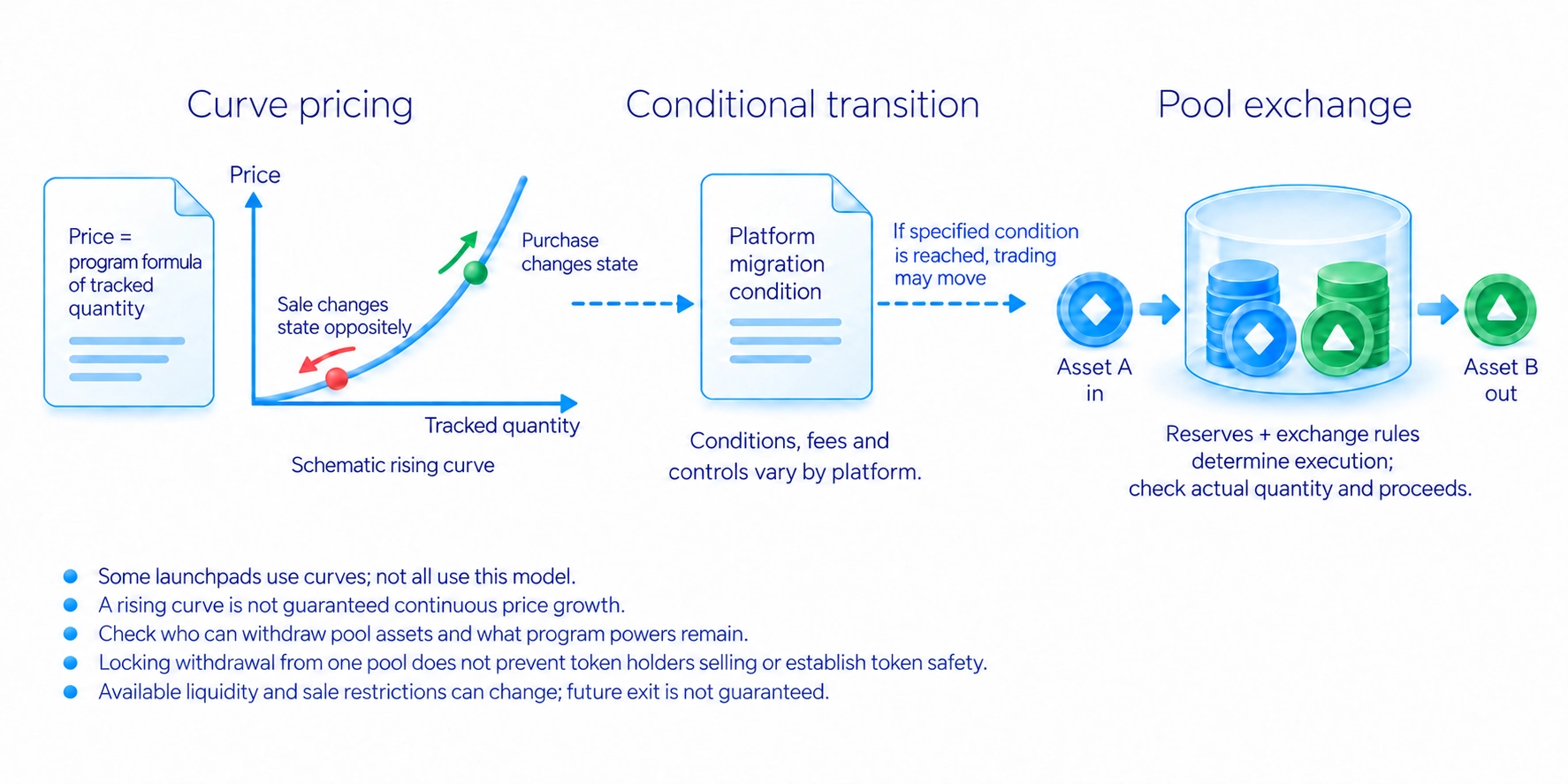
Some platforms use a bonding curve, a formula that determines price from quantities tracked by the program. On a rising curve, another purchase can cost more than the previous one; a sale changes the calculation in the other direction. The formula does not promise continuous growth. Trades, fees and a later change in trading method follow the particular program's rules.
When a specified condition is reached, trading may move to a pool. A pool holds assets for exchange and prices transactions through its own rules. Pump, for example, defines its own migration and liquidity-control arrangements. Do not apply those arrangements to every launchpad: establish who can withdraw pool assets in the selected project.
Why market capitalisation is not your sale proceeds
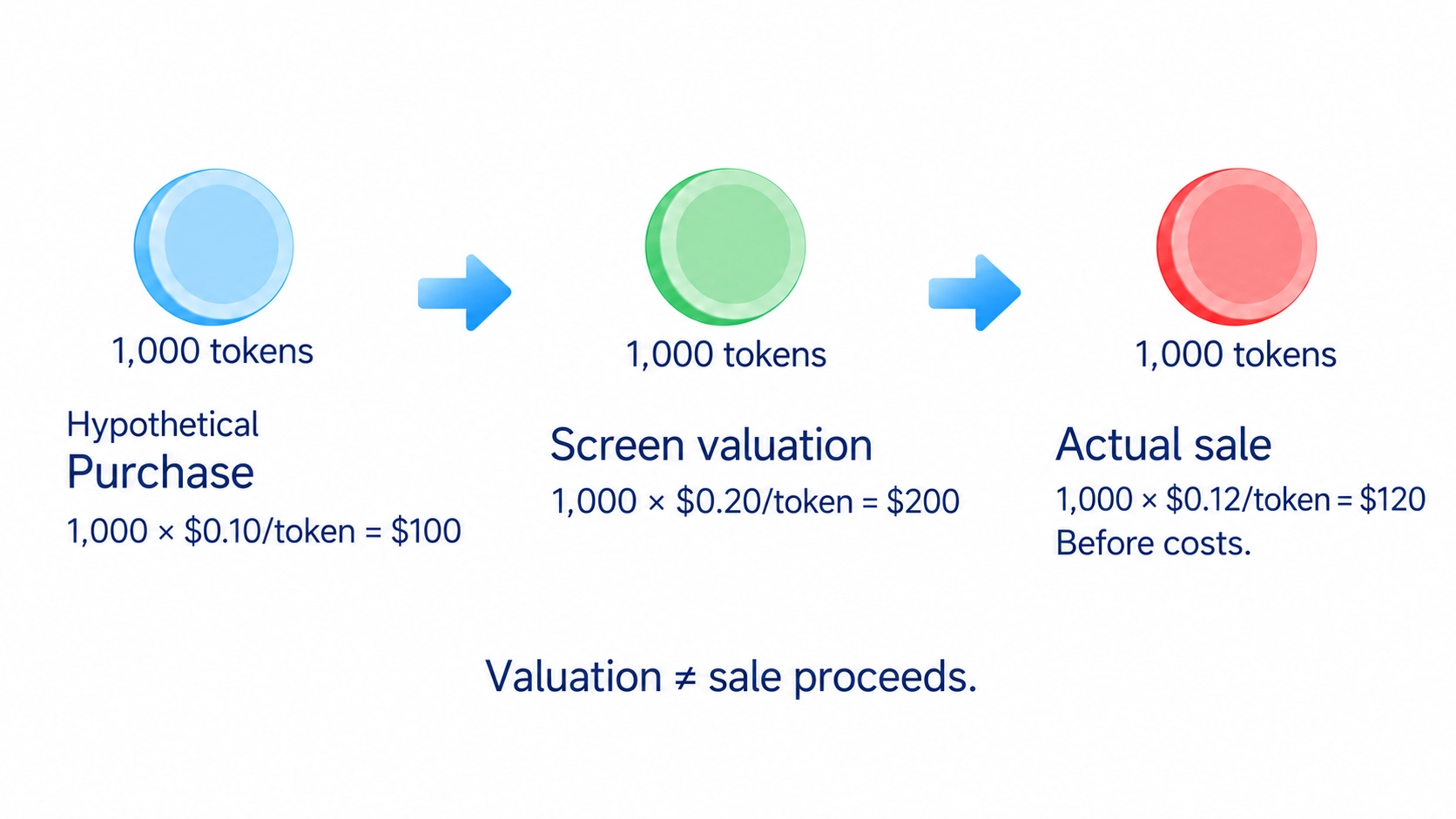
Market capitalisation usually multiplies a coin's price by its circulating quantity. It is a calculated valuation, not the money buyers have deposited or that holders can withdraw. A small trade that raises the last price can increase the displayed value of the entire supply without a comparable amount of new money arriving.
Liquidity describes the ability to buy or sell a chosen quantity without a large price change. On an order-book exchange, check the orders available to trade against; in a pool, check reserves and exchange rules. A large sale against little available liquidity can receive much worse prices than the displayed quote.
Consider a hypothetical purchase of 1,000 tokens at USD 0.10 each, costing USD 100. The screen later shows USD 0.20 per token and values the holding at USD 200. If selling the whole quantity actually gives an average execution price of USD 0.12, the proceeds are USD 120 before costs. The displayed valuation and the amount available from a sale are different figures.
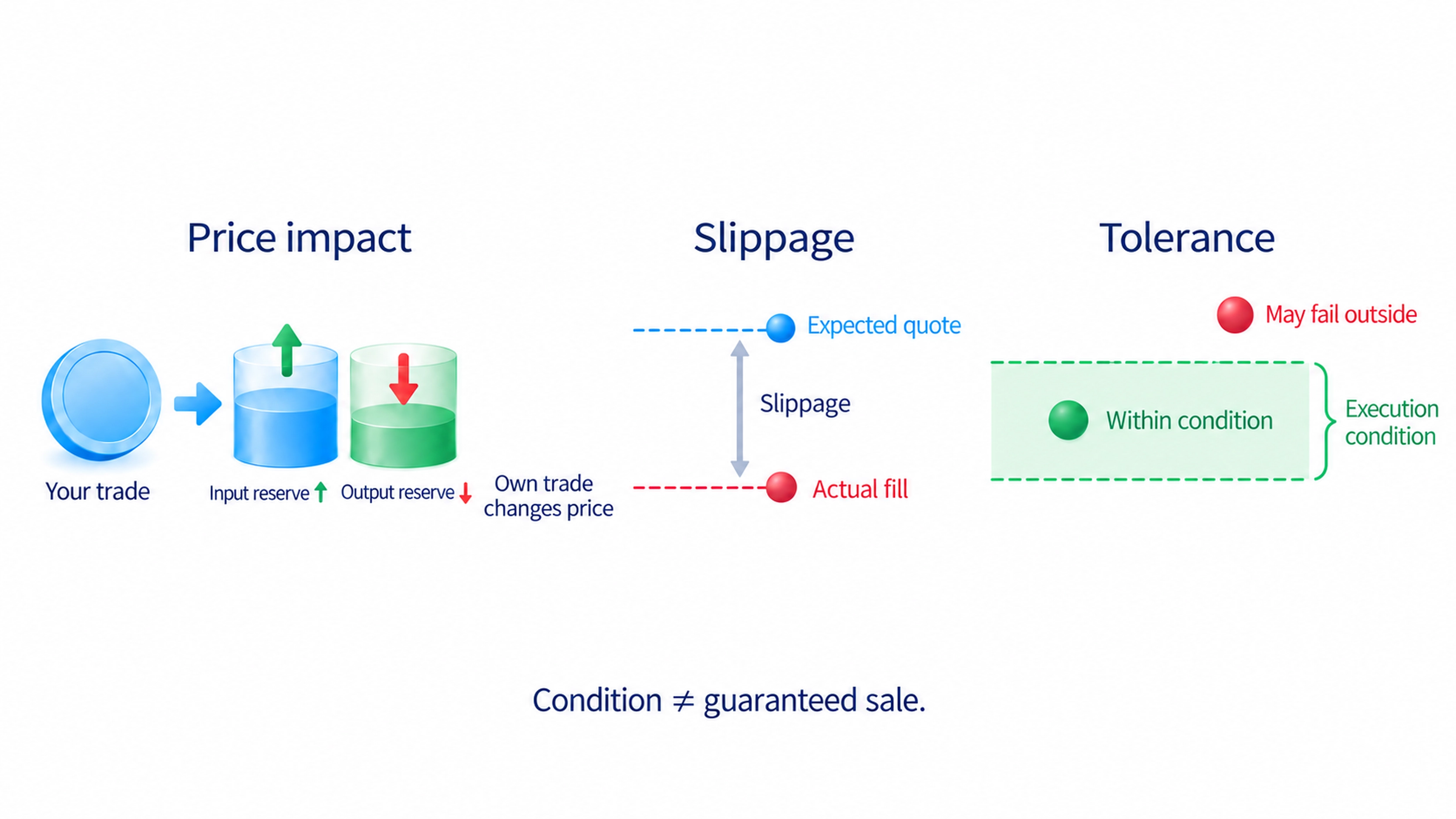
Price impact is the price change caused by your own trade. Slippage is the difference between the expected price and actual execution, which can also be affected by other transactions before yours completes. A slippage tolerance sets an accepted execution condition; it does not create liquidity or guarantee a sale. A swap can fail if its conditions are not met.
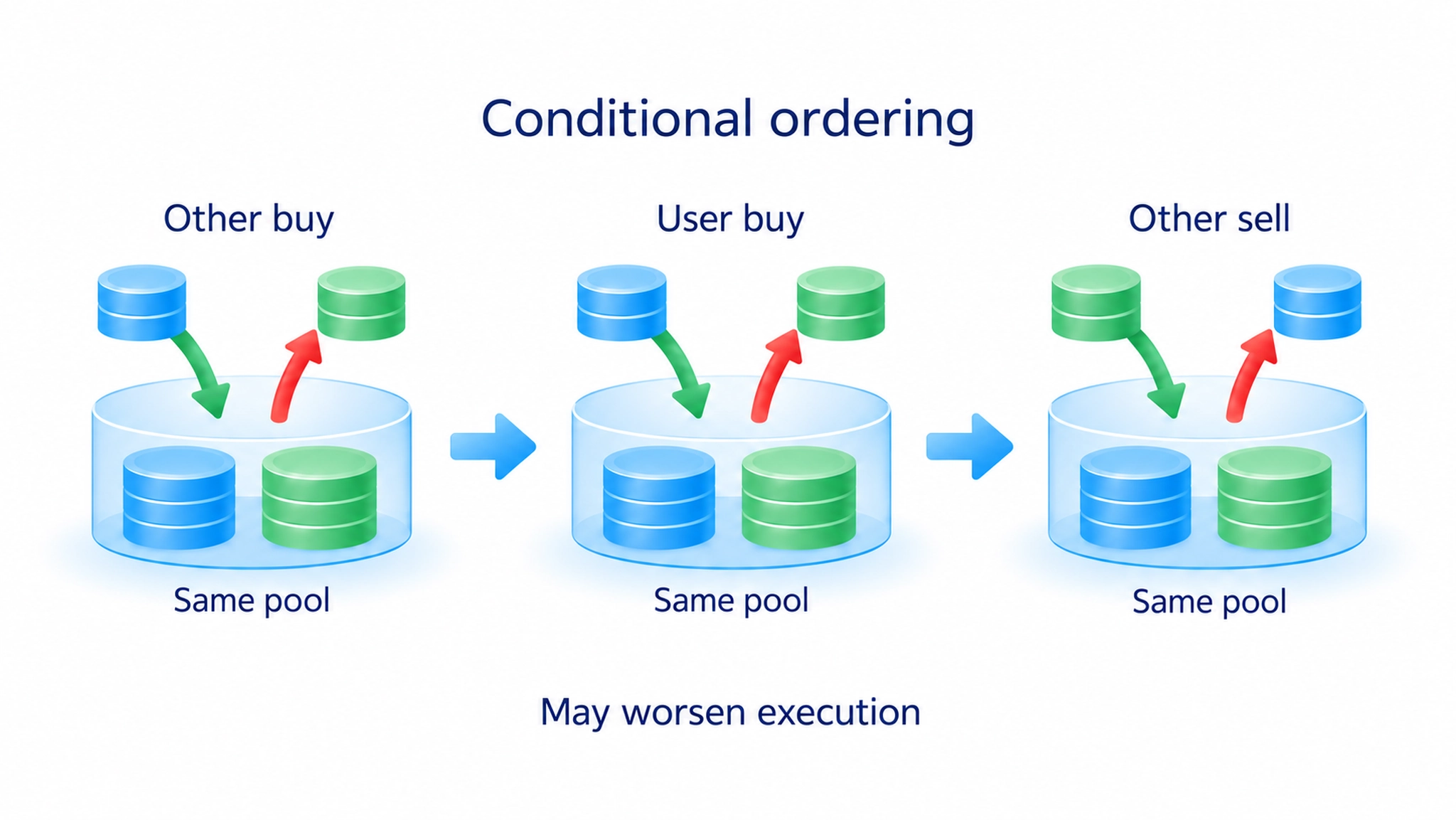
Where pending transactions are visible, another participant may try to place trades before and after your swap. This sequence, called a sandwich attack, can worsen your execution price. A large slippage tolerance leaves more room for unfavourable execution. Available protections depend on the platform and how the transaction is submitted.
Creator and large-holder risks
A large share held at a few addresses can create the risk of a substantial sale. However, one address does not necessarily represent one person: it might belong to an exchange, pool or program. Check its purpose and whether those tokens can be sold before concluding who owns them or what the owner intends.
Permission to issue more tokens allows supply to increase where the program provides that power. Freezing or transfer restrictions can affect your ability to transact. Removing one permission does not verify the rest of the project. Networks and token programs implement these powers differently.
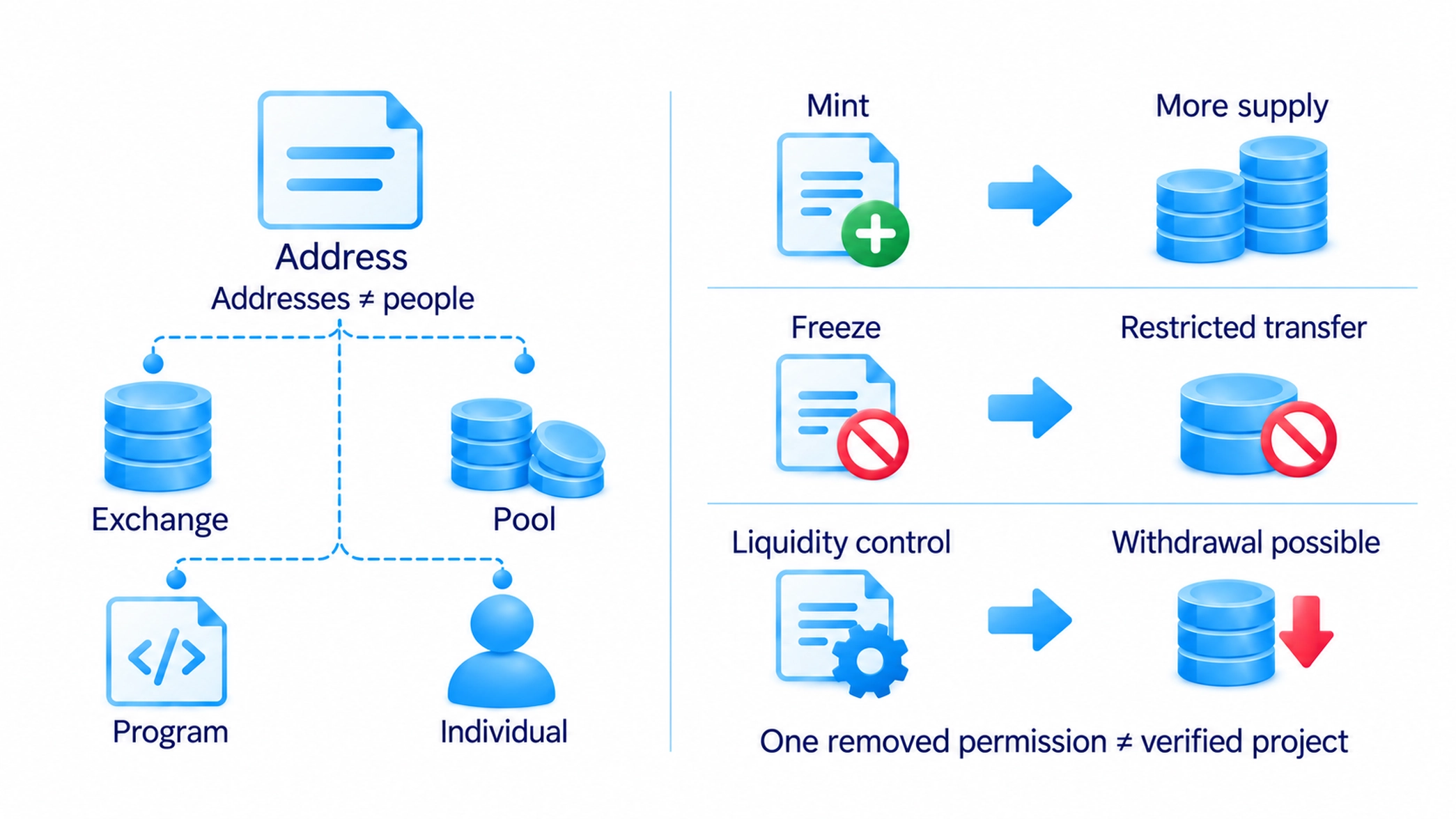
Rug pull describes situations in which organisers use their powers against buyers, for example by withdrawing liquidity they control or selling a large allocation they received earlier. These are different mechanisms. Restricting withdrawal from one pool does not prevent token holders from selling, or verify every part of the token's program.
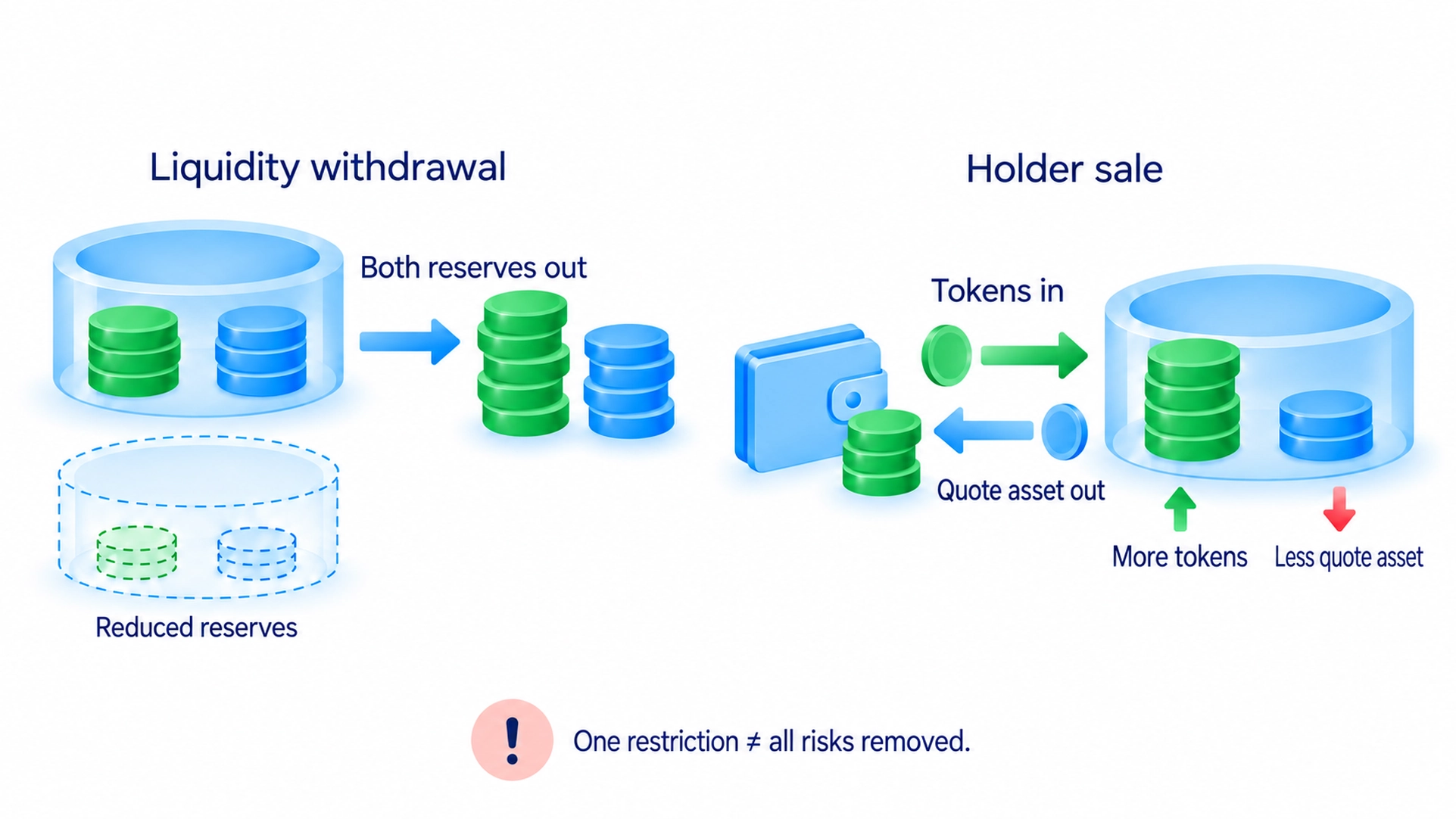
A pump-and-dump scheme attracts buyers through promotion and promises, then early participants sell into the resulting demand. A price rise alone does not prove that scheme occurred. Establish actions, powers and transactions rather than treating the shape of a chart as proof of manipulation.
Some fraudulent tokens allow purchases but restrict sales through their program or impose unexpected deductions. A successful small test sale can reveal something about current conditions, but cannot guarantee a later exit: the rules or market can change. Being able to trade now does not remove the possibility of losing the money invested.
Why stories of large gains can mislead
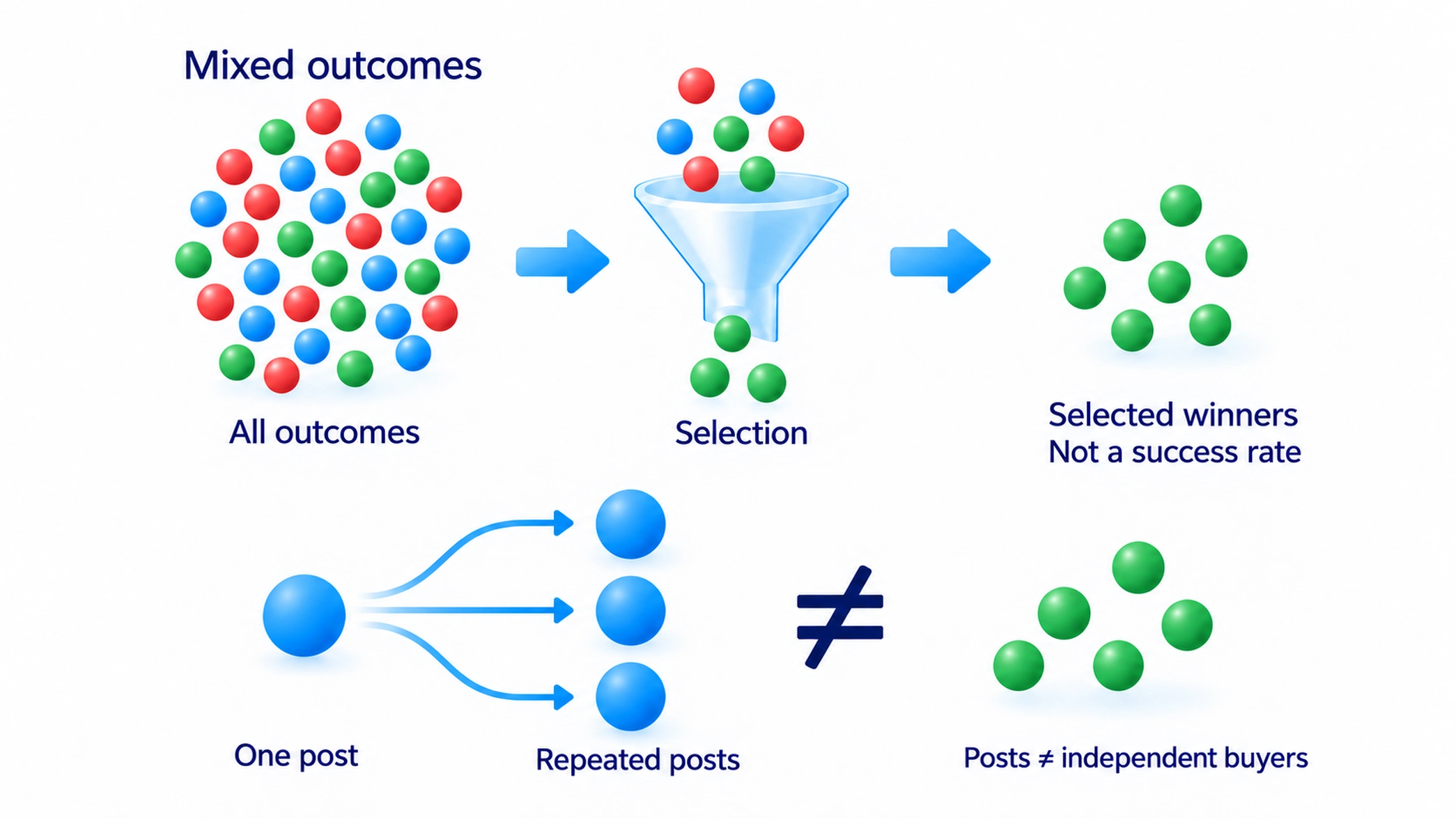
Stories about winners show selected successful cases, not the results of every launched token and buyer. This is survivorship bias: failed projects and unsuccessful trades disappear from the story. Assessing results requires the full sample, costs and executable exit prices, not one screenshot of a rising balance.
Popular posts are not a count of independent buyers. Repeated messages, paid promotion and automated activity can create an appearance of broad interest. Without reliable data, do not assign every memecoin the same percentage of bots or probability of collapse.
My course section on fear and greed examines chasing a fast move and preserving the risk chosen before entry. Applied to a memecoin decision, that means choosing an affordable loss and an exit condition before buying because of someone else's wealth story. This does not make the token safe: a planned exit cannot be executed when selling is unavailable.
Checks before buying a memecoin
First identify the network and token address. A matching name or logo does not establish that you found the intended asset. Then check issuance, allocations, program permissions and the platform's rules. A good-looking chart does not answer those questions when the source cannot establish them.
Check the ability to sell your actual quantity: orders or reserves, estimated proceeds, fees and transfer restrictions. Compare that amount with the displayed holding value. Trading volume does not replace this check or identify the buyers.
Write down the reason for buying, the amount you can lose, and conditions for ending participation. A large supply does not ensure there are buyers for it. If the reason is simply that new buyers will arrive, it depends on future demand rather than an established source of income. Declining a trade with unclear issuance or exit rules leaves your money available for a situation you can assess.
With few available buyers, even a modest sale may receive much lower prices. Assess possible loss up to the entire purchase amount: liquidity can disappear, and creator powers may permit additional issuance, sale restrictions or program changes. These depend on the particular token rather than belonging to every memecoin. Checks before purchase cannot guarantee a future exit; when selling is impossible or price approaches zero, a screen valuation does not return your money.
Frequently asked questions
A memecoin is a cryptocurrency associated with a joke or online community. Its issuance and trading arrangements depend on the project. Interest in its theme does not guarantee a profit.
Buyers can lose interest, large holders can sell, and available orders or pool reserves can be insufficient. The price you receive depends on execution conditions, not only the value shown on screen.
They select winners. Assessing the overall result also requires failed projects, costs and actual exit prices. Leaving those out is survivorship bias, the error of judging the whole group from the cases that remain visible.
Yes. Price declines, unavailable sales or organisers' actions can cause the entire purchase amount to be lost. An exit plan does not guarantee execution when the program restricts selling or available buyers disappear.
A launchpad is a platform for introducing tokens. It may automate issuance and initial trading. A launch there does not by itself establish safety or future value.
Some platforms use a rising bonding curve, a formula that prices transactions from quantities tracked by the program. A purchase changes that state. Sales and a transition to another trading method can change the price that follows; another purchase is not guaranteed to stay profitable.
About the author
Igor Arapov, a practising trader since 2013 and author of the ArapovTrade library. ORCID: 0009-0003-0430-778X.




